Looking Out: A symbiotic network of art beyond Hong Kong
By Mankit Lai
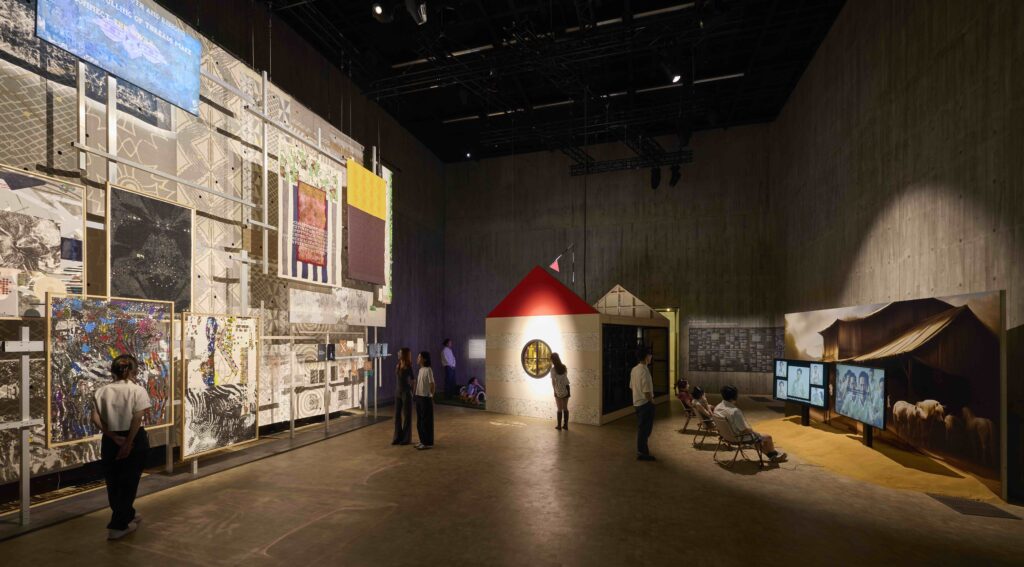
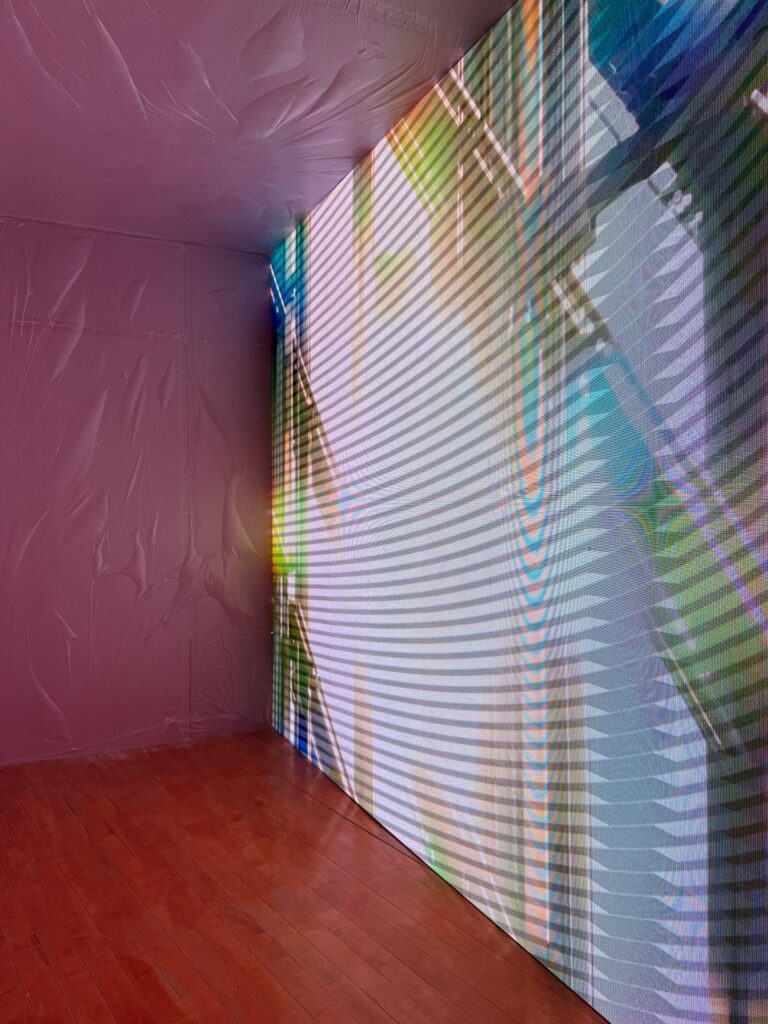
Installation view of Sigg Prize 2025 exhibition, 2025. Photo: Lok Cheng. Image courtesy of M+, Hong Kong.
In the years following the pandemic, art ecosystems in China have undergone profound change amid a slow economic recovery. With the property-driven funding model in decline, art institutions in southern China are adapting and seeking sustainable strategies to build capacity while navigating this transitional landscape. Across Hong Kong, Macao, and the broader Guangdong region, many institutions have embraced more open and innovative operational models that promote cross-border engagement and dialogue, injecting renewed vitality into the regional art scene. Together, these growing symbiotic networks foster cross-regional collaboration and chart open new directions for art in the Greater Bay Area.
Hong Kong: Driving Connectivity
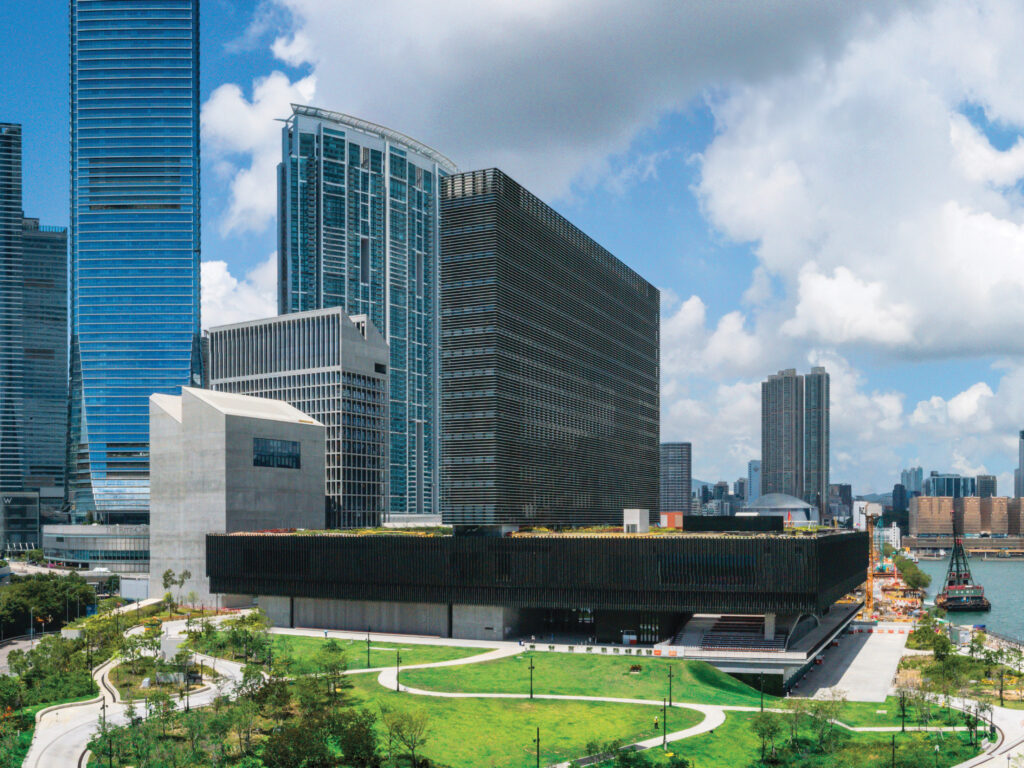
The art scene of Hong Kong remains resilient despite economic uncertainties. M+, a museum dedicated to contemporary visual culture, exemplifies this strength through diversified funding streams that sustain its blockbuster exhibitions and programmes. As a pivotal player in Asia and the global art scene, the museum advocates for cultural exchange and dialogue. Its exhibitions often present historical reviews on overlooked narratives, building gateways to connect regional and international discourses. Dr. Mo Wu, Sigg Curator at M+, explained that the museum adopts a multidisciplinary framework to curate within visual culture. This approach traces fluid historical threads across diverse creative practices, weaving together lesser-told stories and curating a more dynamic narrative within a broader cultural context.
Recent exhibitions such as ‘Canton Modern’ (2025) revisited and reconstructed the cultural identities of 20th century Cantonese art and visual culture, spanning the 1900s to the 1970s—a narrative long considered marginalised within modern art history. Looking to the contemporary, the Sigg Prize, a biennial art award, spotlights emerging artists across Greater China. The 2025 edition recognises the breadth of art practices from southern China, honouring Wong Ping from Hong Kong and Heidi Lau from Macao as the joint winners for their distinctive approaches to moving image and ceramics, respectively.
M+, Hong Kong. Photo: Kitmin Lee. Image courtesy of M+, Hong Kong.
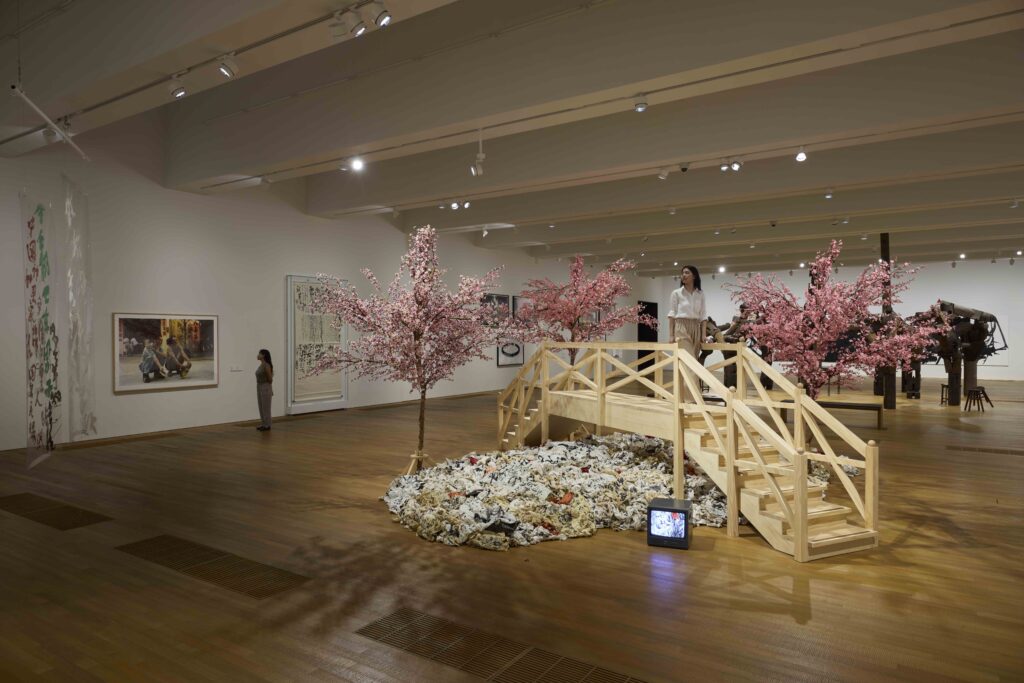
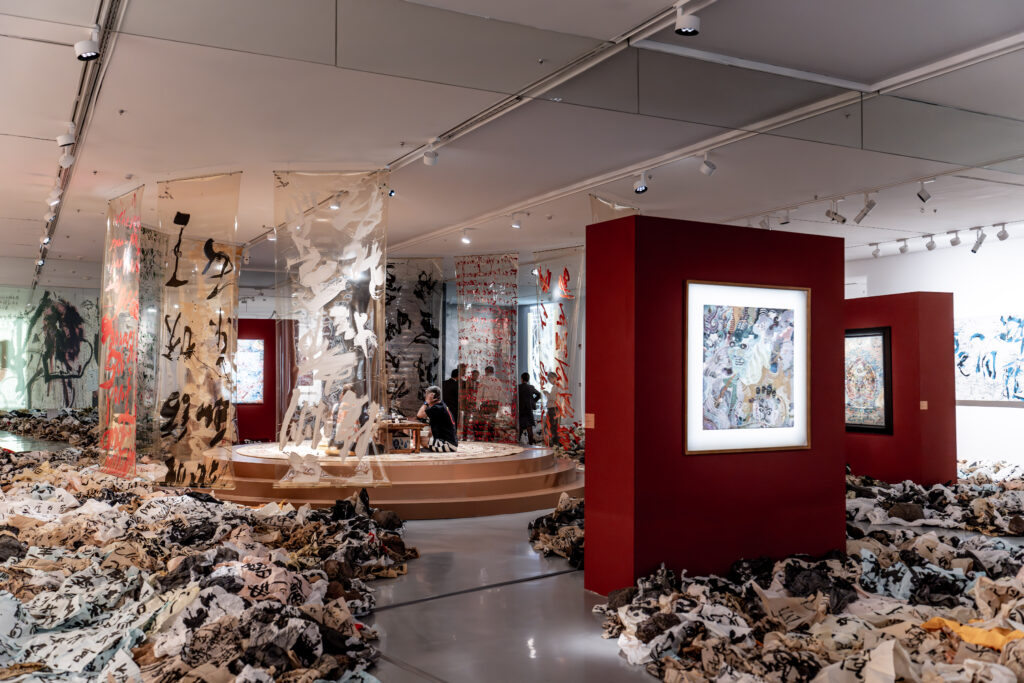
Installation view of ‘Calligraphy Peach Blossom Garden’ (2004) by Yangjiang Group, presented in the exhibition ‘M+ Sigg Collection: Inner Worlds’ (2025). Photo: Lok Cheng. Image courtesy of M+, Hong Kong.
“Exhibitions, however, are not the only avenue for M+ to build networks and foster cross-regional interactions,”emphasised Dr. Wu. The museum actively pursues initiatives beyond exhibition-making, encompassing talks, publications, and curated tours. One such tour brought museum patrons and curatorial professionals to visit institutions and artist studios in nearby regions, including the influential art collective Yangjiang Group in Guangdong. This encounter gains further resonance through the museum’s latest Sigg Collection exhibition, ‘Inner Worlds’ (2025), which features works by the Yangjiang Group from the 1990s to the 2010s. Their pieces challenge the conventional aesthetics of calligraphy through free-spirited transformations and the use of everyday materials—crumpled xuan paper arranged atop massage machines to resemble flowing rivers, wax moulded into scholarly rocks, and calligraphy written on PVC plastic sheets. These works invite viewers to reconsider the connections between tradition and the everyday. Looking ahead, the museum plans to introduce more interactive public programmes with the collective to further activate exhibition engagement.
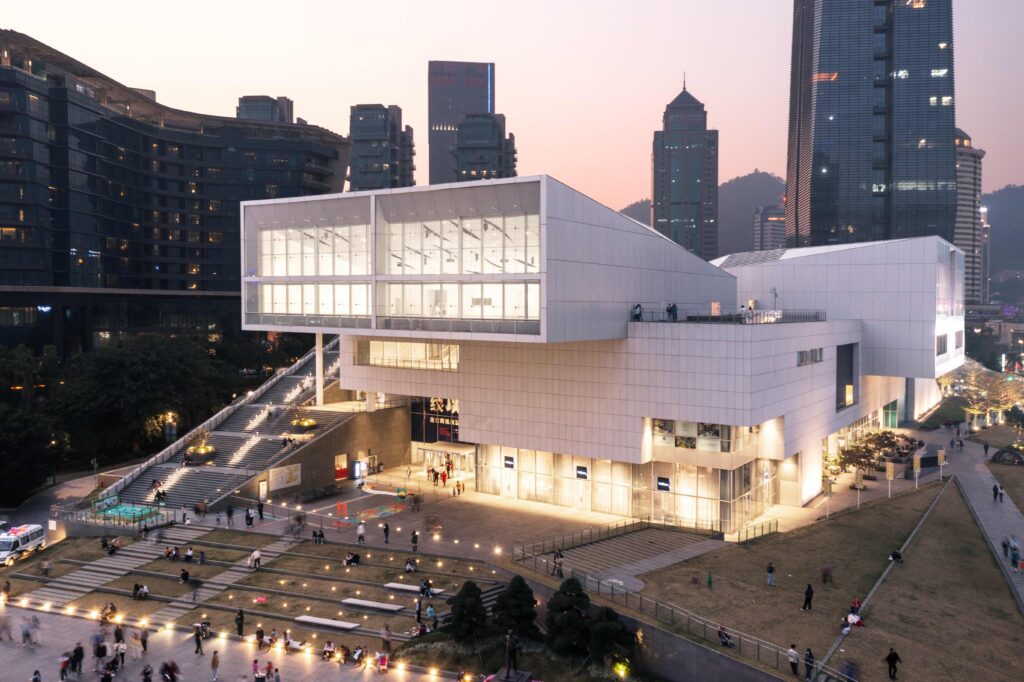
The Sea World Culture and Arts Center in Shekou, Shenzhen. Image courtesy of the Sea World Culture and Arts Center.
Shenzhen: Expanding Horizons
Just an hour’s bus ride from Hong Kong, the Sea World Culture and Arts Center in Shekou, Shenzhen has established itself as a hub for art and design since its founding in 2017, in partnership with the Victoria & Albert Museum. As a cultural and commercial complex, the center integrates exhibition spaces, theatres, and artist residencies alongside commercial galleries and leisure venues, forming a dynamic and collaborative environment through a distinct cluster model. Within this strategic framework, contemporary art is embedded into the broader cultural fabric through thematic exhibitions held year-round. Zhang Xijia, Director of the Sea World Culture and Arts Center, explained that the center’s diverse stakeholders are pivotal in cultivating a creative cluster, one that helps organically incentivise collaboration, knowledge exchange, and symbiotic partnerships for mutual development.
Contemporary Chinese art history remains central to the center’s exhibition strategy, as underscored by major solo shows of artists such as Liang Shaoji, Li Shan, and Zhou Tielun. A recent highlight is ‘Body Beyond the Rules’ (2025), a landmark exhibition by the Yangjiang Group. Echoing the collective’s concurrent historical display at M+, this exhibition extended its timeframe to encompass works created after 2020, including their latest works. This expanded presentation immersed visitors in tens of thousands of crumpled xuan paper, transforming the gallery into a vast sea of calligraphy art. Together, the exhibitions across the two institutions offer a unique opportunity to study the artistic growth of the collective, providing a specific entry point into the contemporary art history of southern China.
Installation view of the exhibition ‘Body Beyond the Rules’ (2025) by Yangjiang Group at the Sea World Culture and Arts Center, Shekou, Shenzhen. Image courtesy of the Sea World Culture and Arts Center.
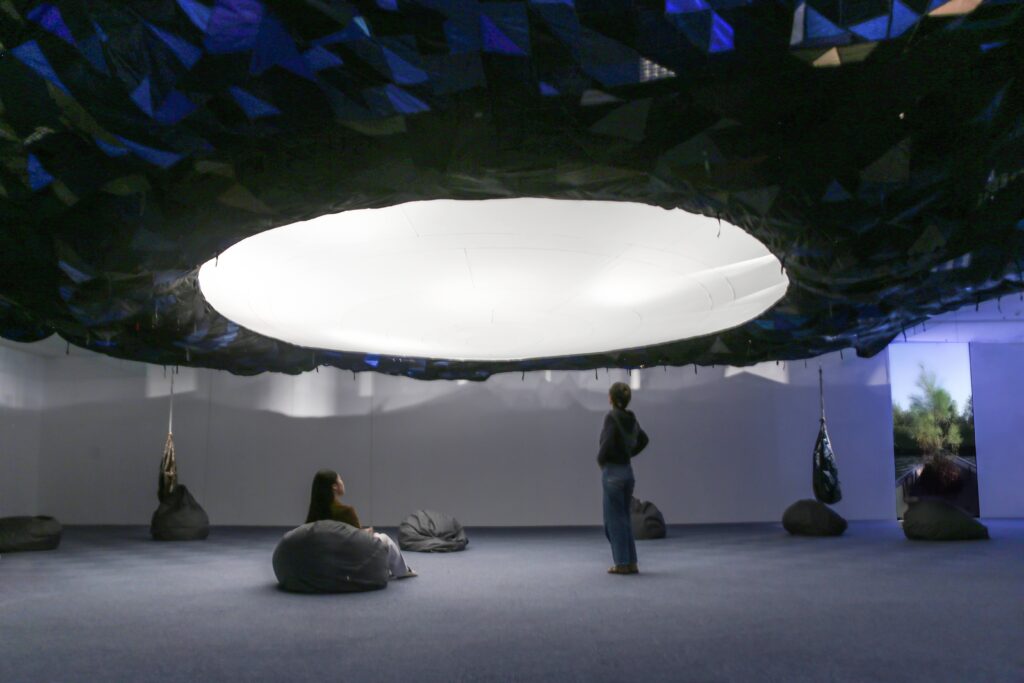
Installation view of the exhibition ‘Behind the Blue’ (2025) by Jaffa Lam at the Sea World Culture and Arts Center, Shekou, Shenzhen. Image courtesy of the Sea World Culture and Arts Center.
When asked about the relationship between Hong Kong and Shenzhen’s art circles, Zhang observed that the two ecosystems have evolved from a Hong Kong-centric model to a dual-core framework of mutual exchange: “Shenzhen serves as a fertile ground for growth, offering ample and flexible spaces for artists and their projects to expand beyond the spatial constraints in Hong Kong.” The center actively seeks collaboration beyond the local region, hosting an annual exhibition that spotlights cross-regional talent. This year, it presented Hong Kong artist Jaffa Lam’s institutional debut in Mainland China—also the center’s first female survey exhibition—marking a significant moment for audiences to experience her large-scale installation practices. Additionally, a partnership with the Hong Kong Arts Development Council has enabled exhibitions from Hong Kong to tour in Shenzhen, deepening dialogues and fostering sustained collaboration between the two art communities.
Guangzhou: Beyond Southern China
An hour-long high-speed train ride from Kowloon will bring you to Guangzhou, where the art ecosystem is showing signs of growth. The annual MOORDN Art Fair has expanded significantly since 2022, with increasing gallery participation underscoring the vitality of the commercial art community. Amid this momentum, Times Museum stands out with a steadfast commitment to supporting regional art practices overlooked by the market. Guided by an artist-centric principle, the museum has long prioritised its resources to nurture emerging voices and creative practices marginalised by commercial art systems.
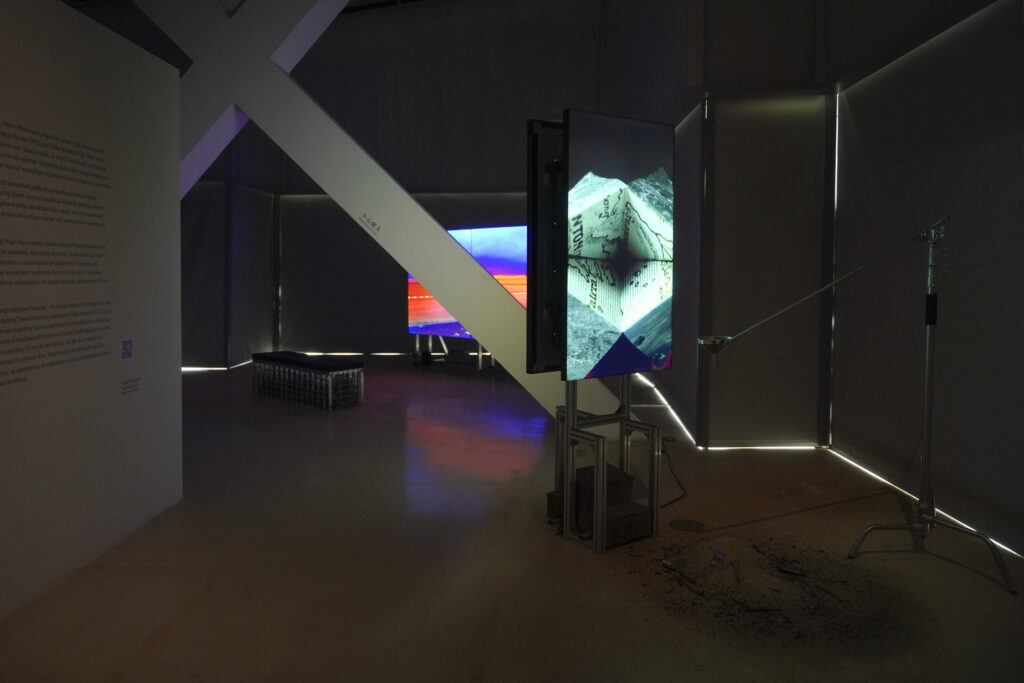
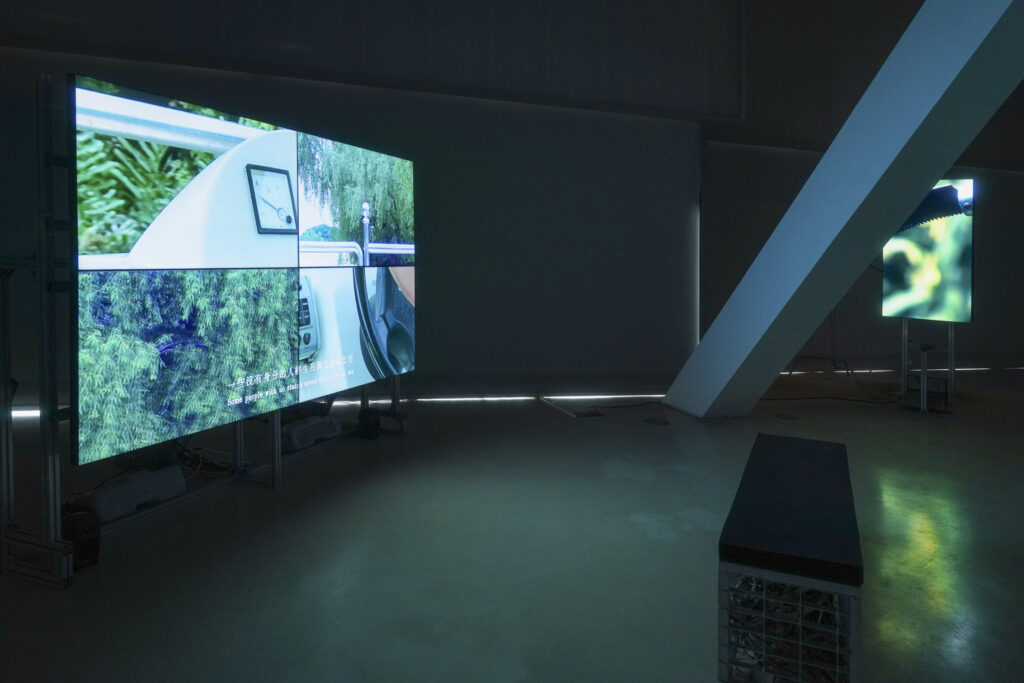
Times Museum, perched atop residential blocks in the Baiyun District, has woven its curatorial vision into the city’s social fabric through exhibition programmes that explore technology, ecology, and urban cultures. Among its flagship projects is ‘Waves Across the South’, a unique initiative offering residencies for artists to develop works or exhibitions that engage with historical and social research on southern China and the Global South. The latest edition, ‘Floating World’ (2025), featured Hong Kong artists Tang Kwong San and Yuen Nga Chi, as well as curator Chris Wan. The exhibition traced the intertwined histories of migration, identity, and cultural continuity spanning Dongguan, Guangzhou, and Hong Kong. Drawing on the nomadic traditions of the Tanka fisherfolk, the artworks reveal how geography, politics, and history have shaped the fluid identities of the Pearl River Delta. This research initiative also invited Chinese diaspora artists and practitioners from Southeast Asia, underscoring the museum’s commitment to cross-regional research and global exchange.
Installation view of the exhibition ‘Floating World’ (2025) by Tang Kwong San and Yuen Nga Chi at Times Museum, Guangzhou. Image courtesy of Times Museum.
Installation view of the exhibition ‘Floating World’ (2025) by Tang Kwong San and Yuen Nga Chi at Times Museum, Guangzhou. Image courtesy of Times Museum.
Nikita Cai, Deputy Director and Chief Curator of Times Museum, explains: “I initiated the project to connect southern China with diverse epistemologies, with a focus on the Pearl River Delta—a region shaped by historical waves of migration and home to the museum. The socio-cultural networks in southern China are also linked with the Global South, reaching beyond places in Southeast Asia.” ‘Waves Across the South’ demonstrates this dynamism within an institutional project, responding to the evolving conditions of southern China in relation to the world beyond. Although funding challenges persist, Times Museum continues to prioritise its programming for encounters among artists, researchers, and audiences, charting a path towards a deeper understanding and discovery of regional narratives.
Macao: Bridging Worlds
A ferry ride across the Pearl River estuary will bring you to Macao, where the art scene is striving to establish platforms for global dialogues. As a historical trading port, Macao has long been a crossroad of cultural exchange—and today, positions itself as an international stage for art and creativity. The third edition of the Macao International Art Bienniale, organised by the special administrative region, exemplifies this intercultural ambition. Titled ‘Hey, What Brings You Here?’, with Feng Boyi as chief curator, and Liu Gang and Wu Wei as co-curators, the bienniale turned Macao into a city-wide art experience. While the main exhibition was housed at the Macao Museum of Art, satellite venues extended its reach into local neighbourhoods.
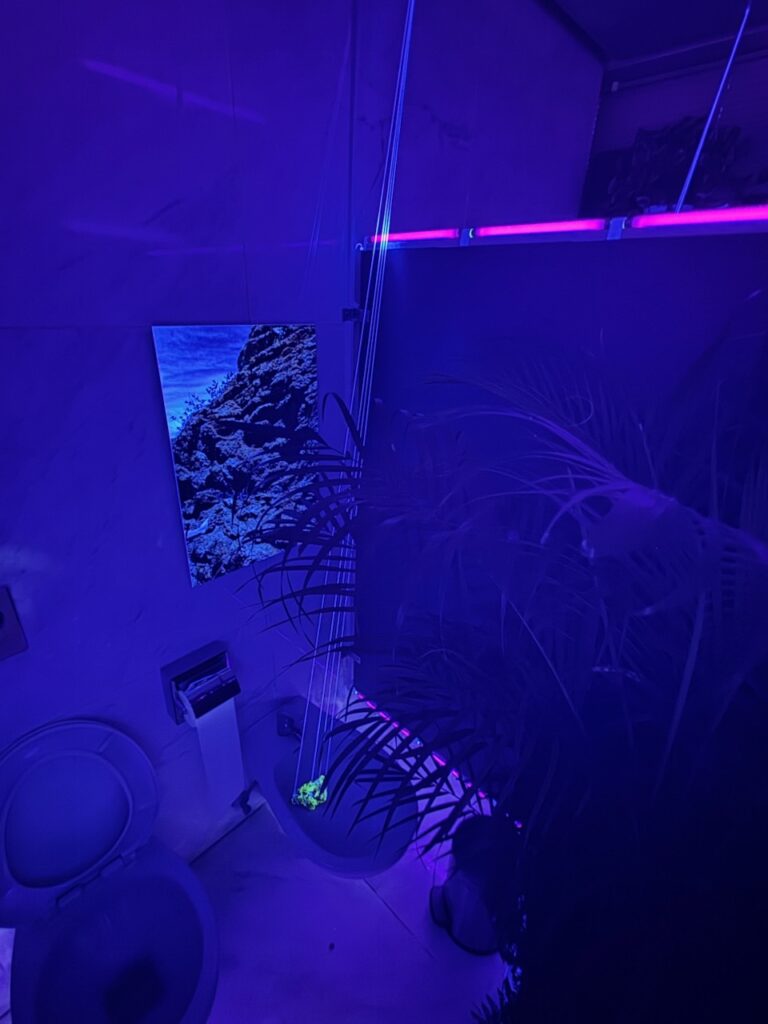
The theme of the bienniale takes the form of a question—a curious, colloquial prompt that invites reflection between oneself and others; it also resonates with the fluid identities and diverse cultural context of Macao. Through this open-minded lens of enquiry, the bienniale explores the encounters between Macao and the wider world, unravelling how local and global phenomena intersect with everyday life. This vision was curated by expanding exhibition spaces into unconventional public areas in the museum. Restrooms, passageways, and rear windows were repurposed into alternative sites for display and interaction.
Jaffa Lam, ‘Mysophobic Bacteria from the Star’, 2025. Installation with rocks from Macao, UV light, and threads in a public toilet. Image courtesy of Art Macao 2025.
Mark Chung, ‘Figment #08’, 2025. Photograph, sculpture of glass and aluminum. Image courtesy of Art Macao 2025.
Among the 46 participating artists were internationally renowned figures such as Ann Hamilton, Gregor Schneider, and Xu Bing. About one-fifth of the artists hailed from Guangdong, Macao, and Hong Kong, including Jaffa Lam, Xue Song, Mark Chung, Pak Sheung Chuen, and Bianca Lei, whose works transformed the museum galleries into reflections of everyday and urban experiences. Wu observed that artists from these neighbouring regions share an affinity with the cultural and social dynamics in Macao. They possess a nuanced understanding of urban density, climates, and cultural hybridity. She further noted, “Their adaptability to repurpose alternative spaces into sites of creative engagement reflects their resourcefulness and transferable living experiences from Guangdong, Hong Kong, and Macao.”
The bienniale offers an opportunity to juxtapose artworks of varied social backgrounds, enabling cross-generational and intercultural exchange. This interplay can spark conversations and bridge regional issues with global narratives. Satellite programmes across the city further expand this dialogue through site-specific works and public art that engage communities and respond to the urban textures of Macao. The bienniale positions Macao not merely as a geopolitical meeting point, but as a window for ideas to circulate freely across borders and disciplines.
Across southern China, art institutions are contributing their unique visions to the region’s rapidly evolving art ecosystems. Despite challenges posed by recent economic downturns, these organisations continue to adapt and experiment. Collectively, they are shaping an organic network of discourse—one that encourages knowledge-sharing and a cross-regional art community. While the long-term outcomes of these interactions remain uncertain, such efforts have already charted pathways for conversations and deeper mutual understanding. Beyond the institutional perspectives outlined in this article, galleries and collectors are also playing an influential role, actively supporting artistic collaboration across southern China. Further research will be essential to assess the impact and lasting significance of these developments as they continue to unfold across the region.
About The Author
Mankit Lai is a curator, researcher and writer based in Hong Kong. His research interests lie primarily in contemporary art, with a focus on curatorial practices, socially engaged practices, and gender politics. He has contributed to exhibitions and research projects at institutions including M+, Asia Society Hong Kong, and the Palace Museum in Beijing. His writing was awarded third prize in the Arts Criticism Recognition Programme 2024 by the Hong Kong Arts Development Council, and received the Emerging Writer Award from the Journal of Curatorial Studies in 2021. In 2018, he was named Laidlaw Scholar and supported by a research scholarship for his project on Chinese propaganda art at the University of Leeds and the University of Hong Kong.