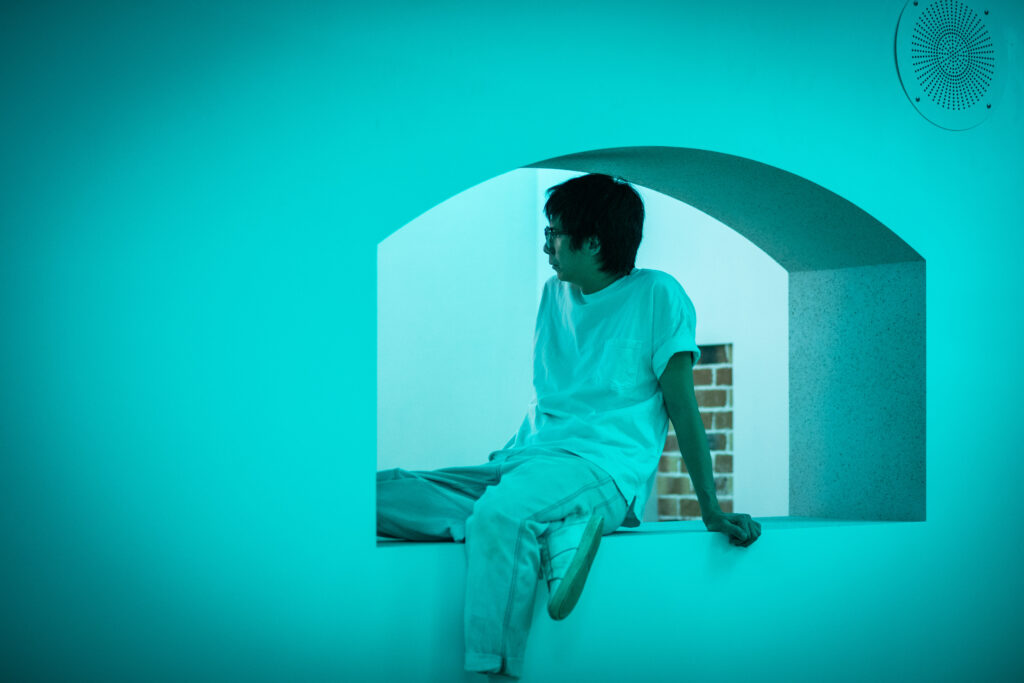
Hong Kong Artist Commission
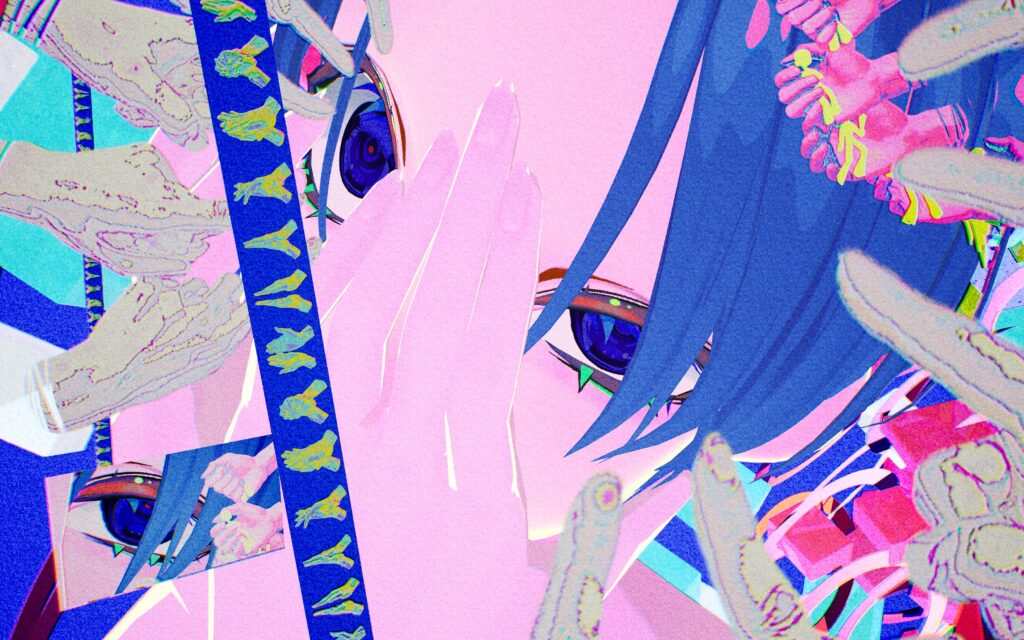
Kaitlyn Hau, ‘Polishing the Bloom’ scene visual demo still from Recursive Feedback Ritual 0.01 (2026). Realtime computational sculpture, 715 × 830 × 300 cm. Courtesy of the artist.
Kaitlyn Hau
Recursive Feedback Ritual 0.01 (2026)
Commissioned Installation
Real‑time computational sculpture with mocap‑driven visuals, procedural sonic/vibration feedback, LED wall panel, foam sculpture, aluminium‑extrusion percussion unit, carpet.
715 x 830 x 300 cm
In computer science, “recursion” describes a method for solving complex problems through self-reference, while “folding” in game design often functions as a mechanism for traversing or transitioning across spacetime. In the sensory world of Kaitlyn Hau, these concepts crystallise into a compulsive ritual aimed at smoothing the psychic “folds” of the self. Recursion Feedback Ritual 0.01 (2026) is a real-time generative installation that translates the artist’s years of navigating bipolar and obsessive-compulsive symptoms—the psychological illusion of incessantly folding, flattening, and reconstructing the self—into a synchronised system of motion capture and kinetic percussion.
The split, low-poly torso at the center of the work functions as a contemporary variant of the heartless Tin Woodman from L. Frank Baum’s The Wizard of Oz (1900). Behind it, a mechanised percussion unit operates like the cold, systemic organs of Marcel Duchamp’s The Large Glass (1915–1923), giving physical form to a dissociative psychological defense mechanism. Each replayed movement is not a mere loop, but an instance of “difference and repetition” in the Deleuzian sense, where repetition is never a return of the same, but a mechanism through which variation and deviation is produced. Within the work’s seemingly infinite “self-call,” minute entropy and distortions ensure that every fold opens onto a new “becoming.”
The computational sculpture unfolds as a “mindfulness exercise” that forcibly establishes order within chaos. As movement becomes quantified and emotion is embodied through percussive sound, the artist negotiates the tension between the real and the virtual, the monumental and the miniature. Audiences are invited to observe how a living entity, caught in the recursive cycle of collapse and repair, attempts to grasp its ultimate “termination condition.”
Emerging new‑media artist Kaitlyn Hau graduated from the School of Creative Media at City University of Hong Kong. Her practice explores the intersection between technical engineering and human emotion. Working with interactive narrative and real‑time systems, she uses VR and other immersive media to transform internal psychological states into perceptible, shareable sensory spaces.
In 2025, Hau presented her debut VR work Dear My Fear (2025), developed through the Hong Kong Arts Development Council’s “Young Arts Tech Talents Residency Scheme”. In this project, she devised a “perceptual–cognitive feedback loop” framework, using interactive narrative structures and calibrated feedback rhythms to translate psychological struggle from abstraction into embodied, immersive experience—giving form to the imbalance and weight of mental illness.
Hau has served as art director and engineer for 3D virtual‑singer performances, contributing to productions in Tokyo, Taipei, California, and beyond. Her expertise lies in orchestrating motion‑capture data, foregrounding breath and micro‑gestural tension to endow digital personas with a distinct sense of vitality. Hau has also instructed a specialised course on narrative‑driven VR creation at Hong Kong Baptist University, and continues to investigate how interactive technologies can be transformed into “empathy devices” that connect human interiorities.
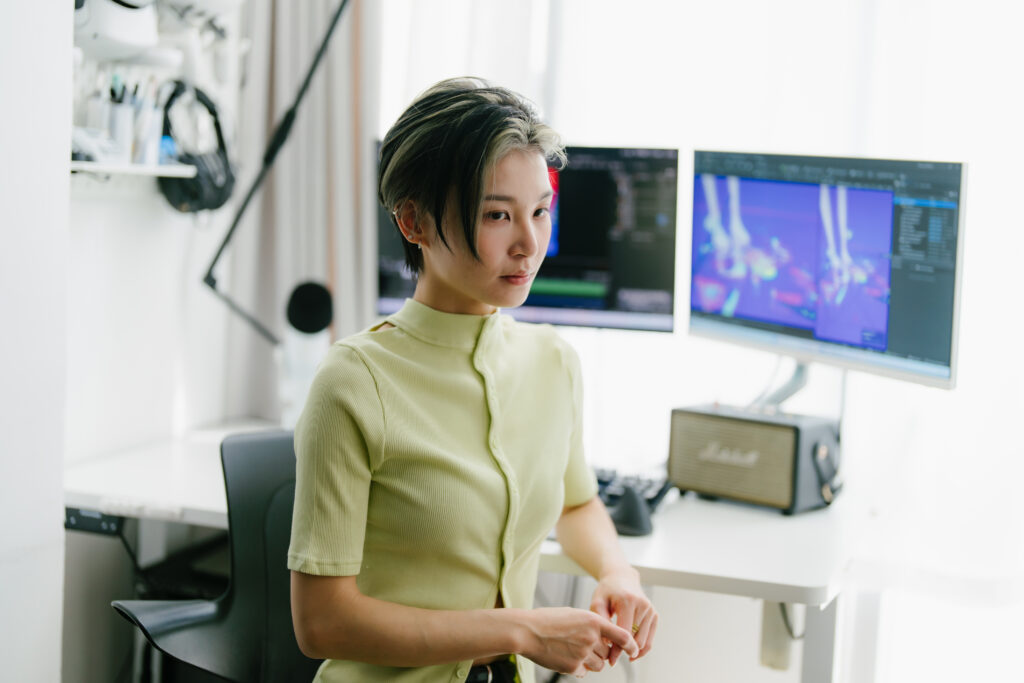
Image: Kaitlyn Hau. Courtesy of the artist.
Nadim Abbas
A Brazen Rift (After Branzi), 2025
Commissioned Installation
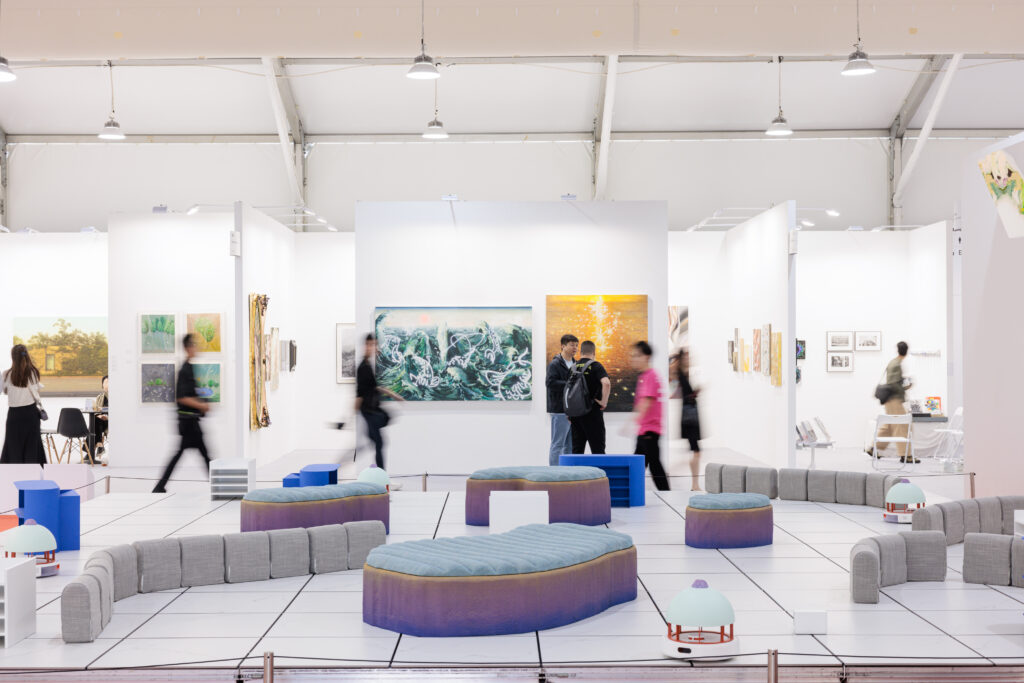
For Art Central 2025, Hong Kong artist Nadim Abbas will unveil A Brazen Rift (After Branzi) (2025), a newly commissioned large-scale installation.
Architectural drawings, as a medium, face the future. They divine possibilities while grounding themselves in the present. They are a call to respond—rooted in the responsibility architects hold as makers of space, to the future of the environments they shape.
In the 1960s, Andrea Branzi of Archizoom Association was one such architect who augured a radical future. Responding to the rigid frameworks of modernist architecture, he postulated decentralized, imaginative cities that evoked cellular organisms. His drawings became proposals for alternatives to urban life as we know it.
At the heart of Abbas’s two-decade-long practice is an interrogation of the image in an age of its omnipresence. Using modular forms, Abbas frees, interrogates, and reworks Branzi’s two-dimensional visions, breathing new life into their ambitious eukaryotic structures. The site-specific installation draws parallels between the movement of people in densely populated urban centers and the kinetic energy of crowds within an art fair.
Nadim Abbas explores the mercurial nature of images and their ambiguous relationship to reality. This has culminated in the construction of complex set pieces, where objects disappear into their own semblance and bodies succumb to the seduction of space.
Abbas’ work first developed out of a fascination with optical phenomena, mirroring and the creation of immersive theatrical scenarios. These often touched on the issue of location and how that might structure a dialogue with the notion of something being real yet an image but also a simulacrum of the real. Wary of a purely “retinal” or illusion-based reading of his work, he would allow elements of inconsistency to show through, in a bid to let the mechanisms of construction unfold before the viewer.
These preoccupations with the phenomenological intricacies of visual experience would later shift towards a wider inquiry into technologies of perception. Referencing a diverse range of subjects, from bunker archaeology to otaku subcultures, Abbas instils generic forms with unfamiliar associations, in an attempt to describe the “invisible violences” that permeate seemingly innocuous facets of everyday life.
Image: Nadim Abbas. Photo by Pak Chai. Courtesy of Oi!