Yi Tai Sculpture & Installation Projects
Jeong-A Bang
b. 1968, Busan
Oliver Stone’s Swimming, 2024
Acrylic on a translucent fabric
623 x 308 cm
The Space Between Us, 2025-26
Acrylic on a translucent cloth
400 x 650 cm
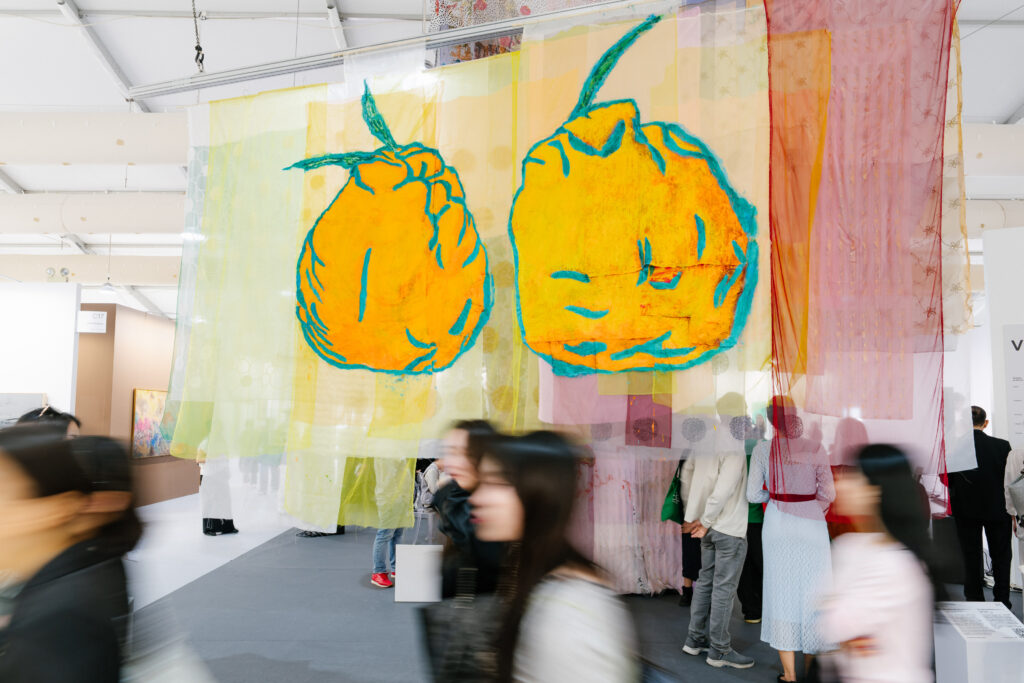
Jeong‑A Bang presented two acrylic paintings on translucent fabric that unfolded as suspended tableaux of tension, personal narrative, and social critique. Oliver Stone’s Swimming (2024) emerged from a position of sorrow and sharp cynicism, responding both to the climate crisis and to filmmaker Oliver Stone’s pro‑nuclear advocacy in Nuclear Now (2022), in which he gestured toward a cooling pool of nuclear waste and asked a factory worker, “You could swim here, right?” In Bang’s rendering, swimming becomes a charged motif, an image of buoyancy tinged with unease, laying bare the fragile optimism and ethical ambiguity intrinsic to promises of technological progress.
In The Space Between Us (2025–26), Bang depicts two hallabongs (mandarin oranges from Jeju Island) facing one another, staging the charged moment when distinct beings meet after moving through different temporal trajectories. The work invites reflections on relationality shaped by time, intimacy, and the spaces that connect and separate.
Presented by Gallery MAC, Busan
The Space Between Us was produced with support from the Korea Artist Prize Promotion Fund, SBS Foundation, and the National Museum of Modern and Contemporary Art, Korea.
Elnaz Javani
b. 1985, Tehran; lives and works in Colorado
The Fate, 2024–
Series comprising 12 works to date
Dimensions variable
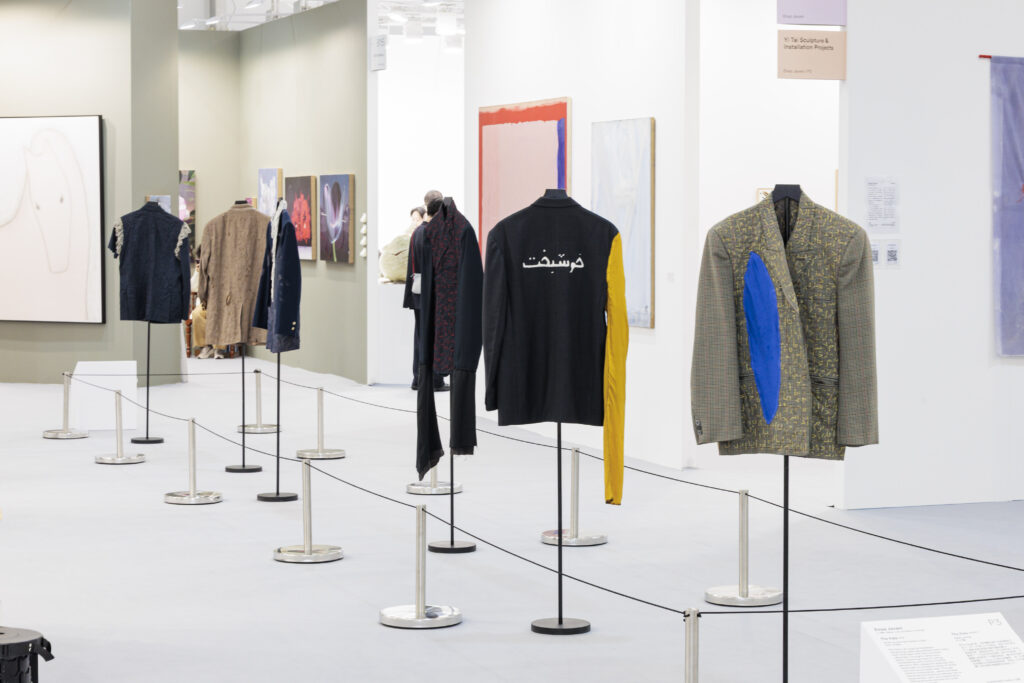
The Fate (2024– ) is an ongoing installation comprising twelve secondhand coats, each hand‑sewn with Farsi and Azeri calligraphy. Through a meticulous, labour‑intensive process of cutting, reassembling, and transforming the garments with collage and appliqué, the works bear simultaneous traces of skilled care and accumulated wear. Through material manipulation, Javani activates memories and emotional residues tied to displacement, exile, and translocation, folding personal archives into wider collective histories.
Presented by RARAES Gallery, Dubai
Silvester Mok
b. 1996, Hong Kong
The Digital Fossiliser, 2026
3D printer, 3D scanner, resin, ceramic, metal furniture
400 x 300 x 200 cm
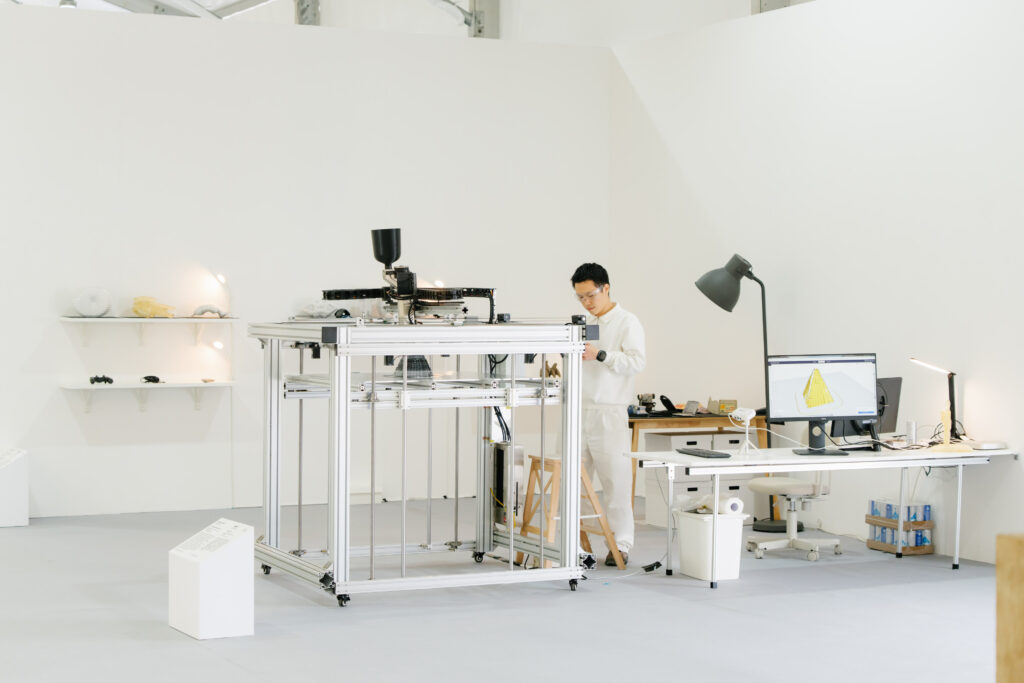
Drawing on Hong Kong’s first dinosaur fossil discovery in 2024, this project reflected on how life and objects are preserved across time. Inspired by natural fossilisation and amber formation, Mok used 3D scanning and printing as a form of “accelerated fossilisation,” transforming everyday objects into ceramic and resin works that were conceptually preserved. Presented as a living workshop within a fictional laboratory, the installation addressed questions of permanence, value, and memory in the digital age.
(Collaborator: Carmen Tsui, Myron Lai, Simon Wu)
Presented by Touch Gallery, Hong Kong
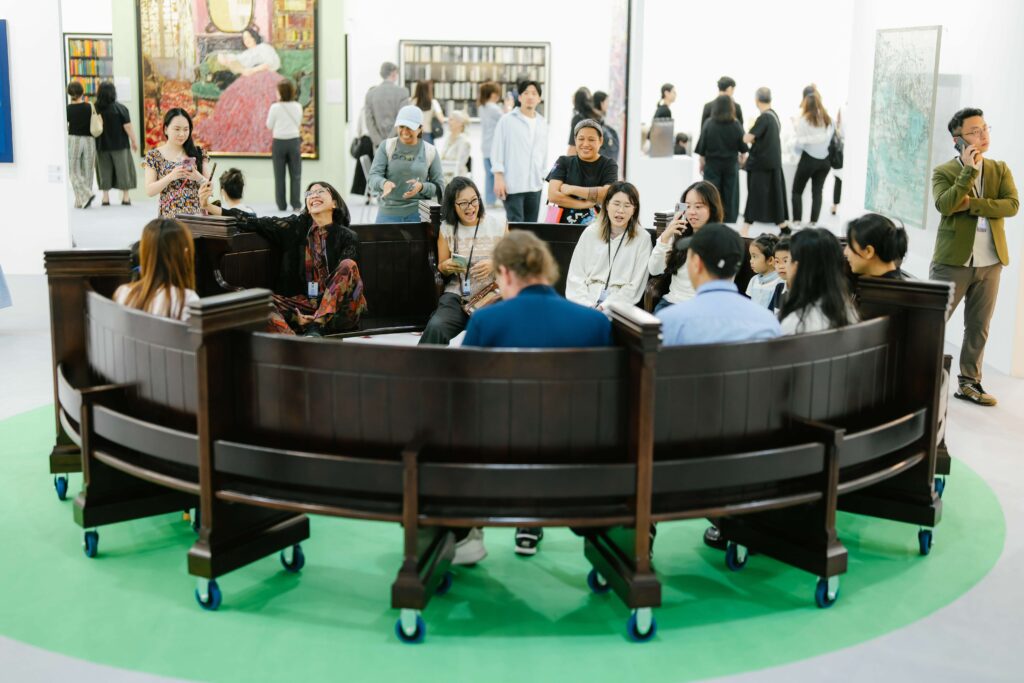
OrangeTerry
b. 1993, Hong Kong
Found Faith, 2026
Wood, directional caster
4000 x 4000 x 1080 mm
OrangeTerry is a Hong Kong–born artist and industrial designer whose practice centres on post‑industrial design, found objects, and surplus materials, reframing everyday furniture and fixtures into sculptural installations. In Found Faith (2026), the artist took a pew gifted by a senior artist friend as the basis for his large‑scale sculpture. Occupying a grey zone between functional object and sculptural proposition, the work displaces the pew from its congregational logic, recasting it as a site for introspection rather than worship. Its deliberate ‘uselessness’ becomes generative—opening a reflexive space in which visitors are invited to reconsider the social and emotional scripts embedded in the things we use. Stripped of its outward-facing purpose, the pew turns communion inward, encouraging reflections on the pursuit of faith, values, and points of orientation amid times of uncertainty.
Presented by Square Street Gallery, Hong Kong
Supported by THE BOTANICAL
Alexis Wong
b. 2002, Hong Kong
Sunken Echoes, 2026
3D-printed thermoplastic polyurethane (TPU), beechwood frame, birch plywood, electronic components, artificial fur, feathers, fiberglass and epoxy resin, gooseneck pipe, latex, latex paint, polyethylene terephthalate (PETG), gypsum, polystyrene, rawhide, sand, speakers, steel plate
Dimensions variable
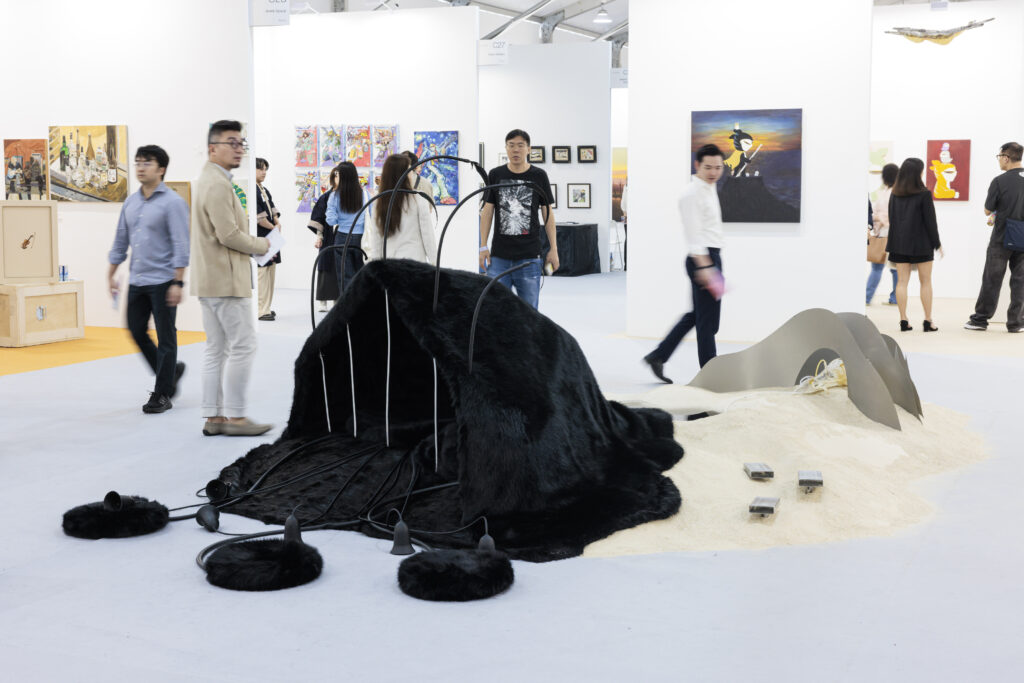
Alexis Wong arranges black mountainous forms, translucent shells, a suspended quasi‑organic vessel, and sedimentary traces into a charged spatial field shaped by forces of attraction and repulsion. Informed by the Eastern concept of “shi’ (勢), understood as the propensity or directional pull arising from a given configuration, the installation stages a “shi‑field” in which relational currents and structural pressures guide perception and movement. “Shi” is positioned as a vital directional intuition for navigating accelerated, volatile times—a mode of sensing how to situate oneself, how to perceive, and how to move forward through self-attunement.
Presented by Yiwei Gallery, Los Angeles, Wuhan