Minor Keys, Major Chords, and Shifting Scales — the 61st Venice Biennale
By Aaina Bhargava
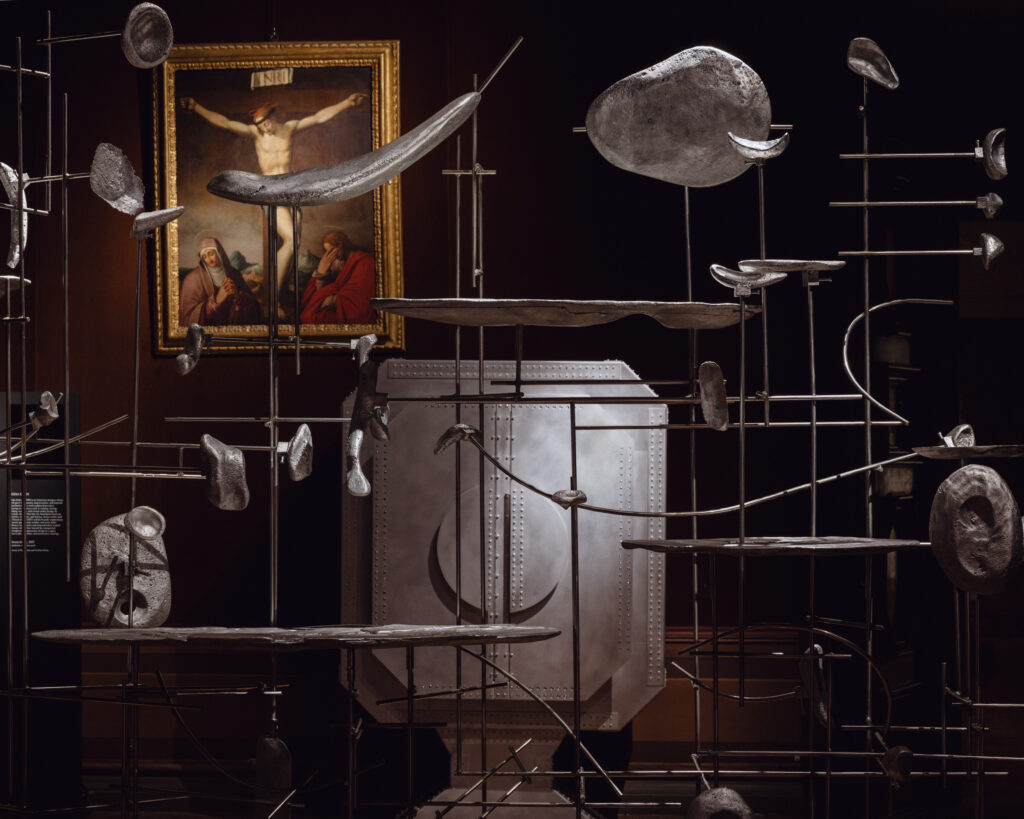
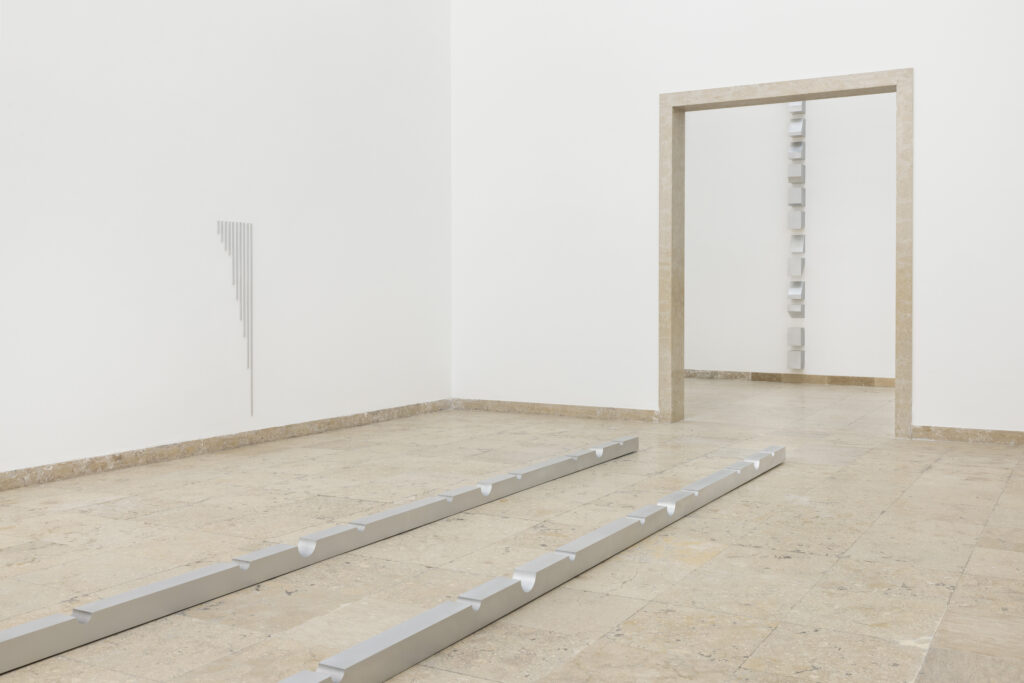
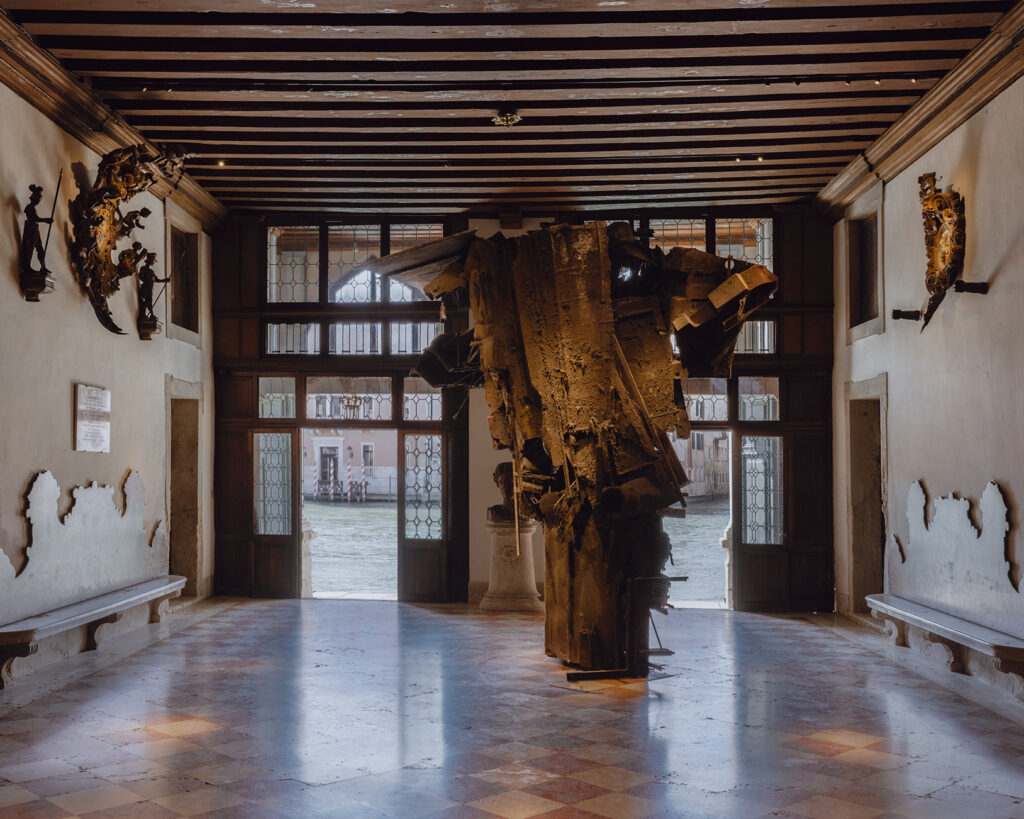
Fondazione Dries Van Noten: Misha Kahn, 'Flotsam Jetsam', 2017. Aluminum, stainless steel. Courtesy of Friedman Benda and the artist; Arthur Vandergucht, 'Metropolis Cabinet', 2025. Aluminium, rivets. Courtesy of Uppercut and the artist; Tuscan School, 16th century, 'CRUCIFIXION WITH THE MOURNING'. Oil on panel. Photo by Matteo de Mayda.
The opening of the Venice Biennale mirrored the upheaval consuming the world. Protests, untimely deaths, a prize jury resigning, provocative displays—all played out against the backdrop of the US–Israel–Iran war.
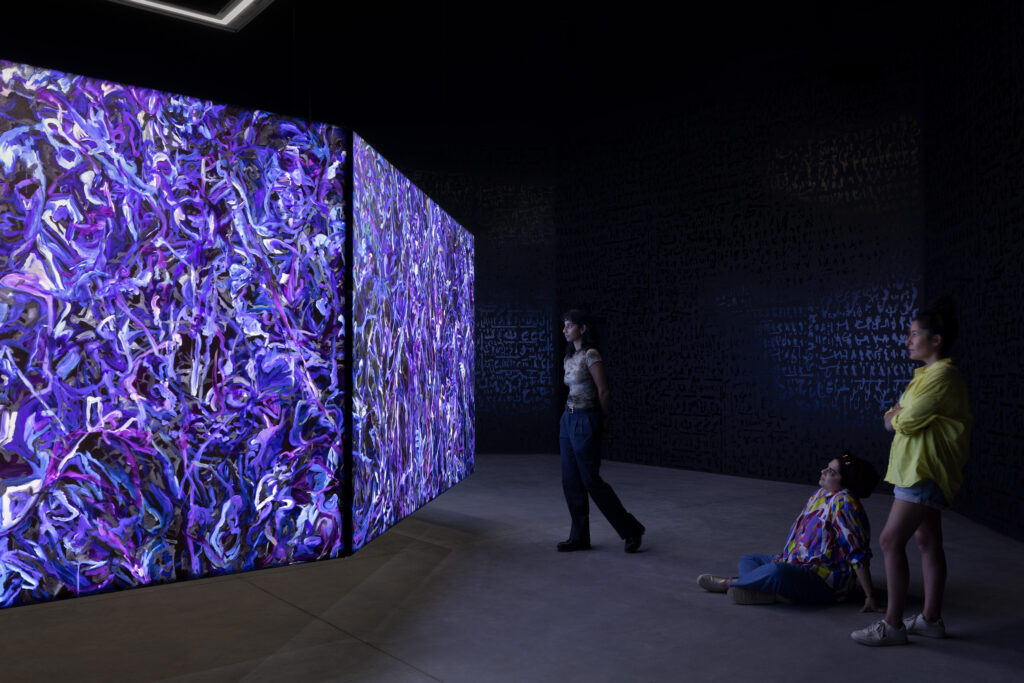
On the second day of the preview, artist collective Pussy Riot, clad in black and their signature pink balaclavas, stormed the Giardini to protest Russia’s participation in the event. Art Not Genocide Alliance (ANGA) and several Italian cultural activist groups started a city-wide protest against the re-opening of the Israeli pavilion. Artist Gabrielle Goliath’s haunting presentation Elegy was cancelled at the South African pavilion for its references to Gaza. Conceptually centred on mourning, Goliath’s video and sound installation, which was ultimately shown elsewhere in Venice, channels lamentation through operatic music and serves as an ode to victims of femicide, colonial violence, and violence targeting queer communities. Australia’s Khalid Sabasi was initially dropped just five days after his selection, with the decision informed by definition of his earlier work as anti-Israel. He was later reinstated and showed his Sufi-inspired calligraphic murals conference of one’s self at the pavilion.
Khaled Sabsabi, ‘conference of one’s self’, 2026. Installation view at the Australian Pavilion, The 61st International Art Exhibition of La Biennale di Venezia. Photo by Andrea Rossetti. Courtesy the artist and Milani Gallery.
The Biennale’s jury resigned en masse in response to Israel’s and Russia’s eligibility for the Golden Lion awards. This triggered organisers to start an audience-based voting system, in response to which artists refused to accept the award should they win. All these events came on the heels of the deaths of Biennale curator Koyo Kouoh and artist Henrike Naumann, whose work is featured in the German pavilion.
The tone and sentiments of the opening week were in some ways the antithesis of the Biennale’s theme, ‘In Minor Keys’. Kouoh, who wanted us to slow down, listen, and reflect. In other ways, however, the sentiments were very much those she sought to address and remedy, inviting us to shift into a slower gear, “because, though often lost in the anxious cacophony of the present chaos raging through the world, the music continues.”
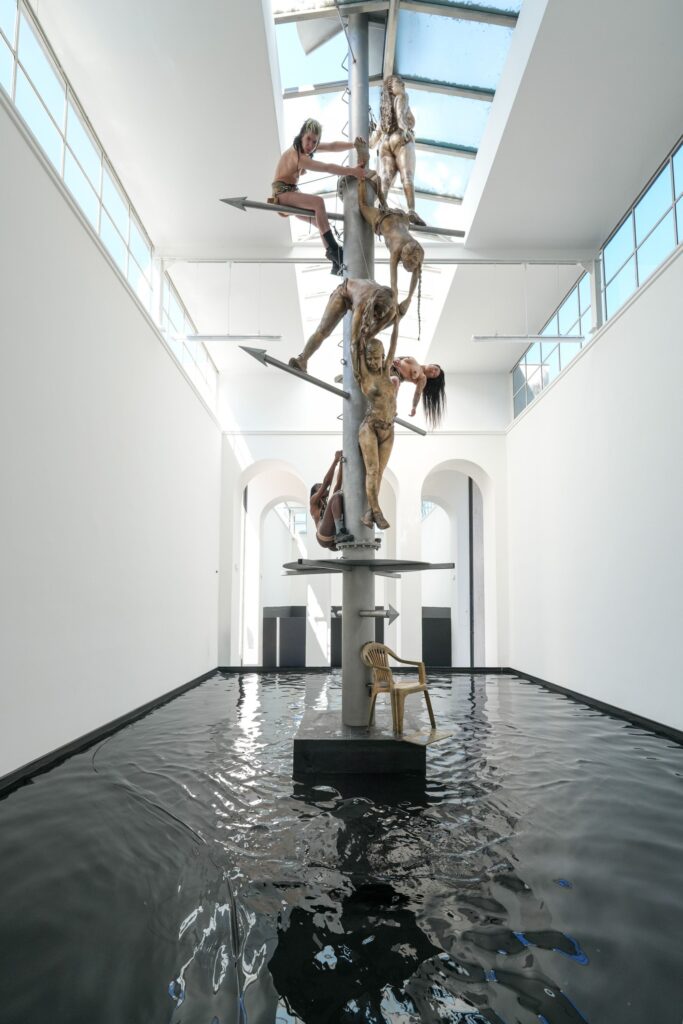
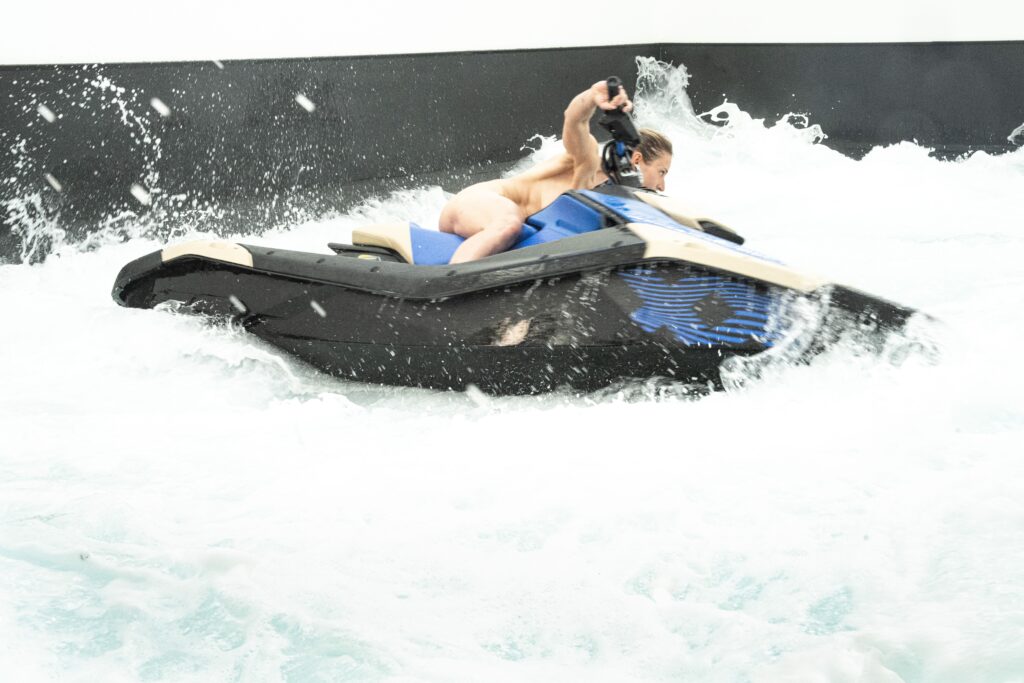
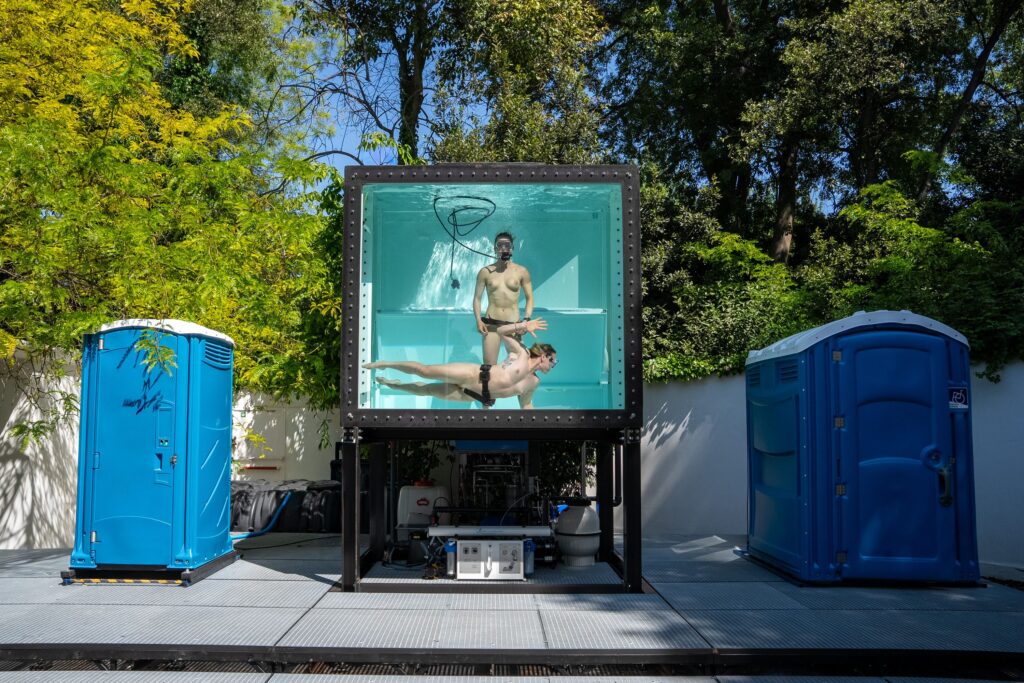
Events this year challenged the role of art at the Biennale, in particular the relevance of the national pavilion format. The Biennale as a platform to display or cultivate soft power is inherent in its conception. This edition featured the most national pavilions ever in the Biennale’s history. Qatar’s prominent new spot in the Giardini is evidence of the country’s heavy investment in cultural infrastructure. But governments and cultural workers weren’t the only ones making bold statements—artists were too. Florentina Holzinger’s trademark confrontational, unapologetic theatrics stole the spotlight with SEAWORLD VENICE at the Austrian Pavilion. Through its shock value—a nude woman riding a jet ski in a flooded pavilion, female bodies creating a cross-like formation on a weather vane, and a performer manoeuvring a water tank sustained by visitors’ urine—Holzinger broached topics such as climate change and rising water levels, revealing the failures of economic, ecological, societal, religious, and patriarchal systems. The work’s visceral impact emphasises the vulnerability of human (particularly female) bodies, and is worth waiting the hour (or two) it takes to enter the pavilion.
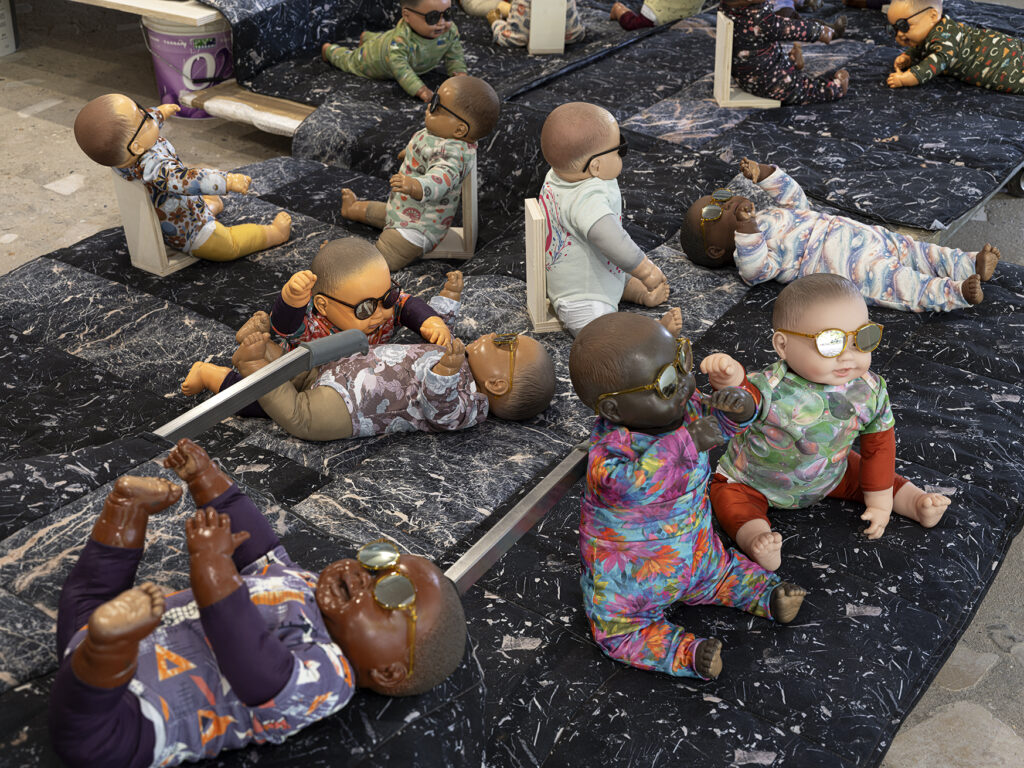
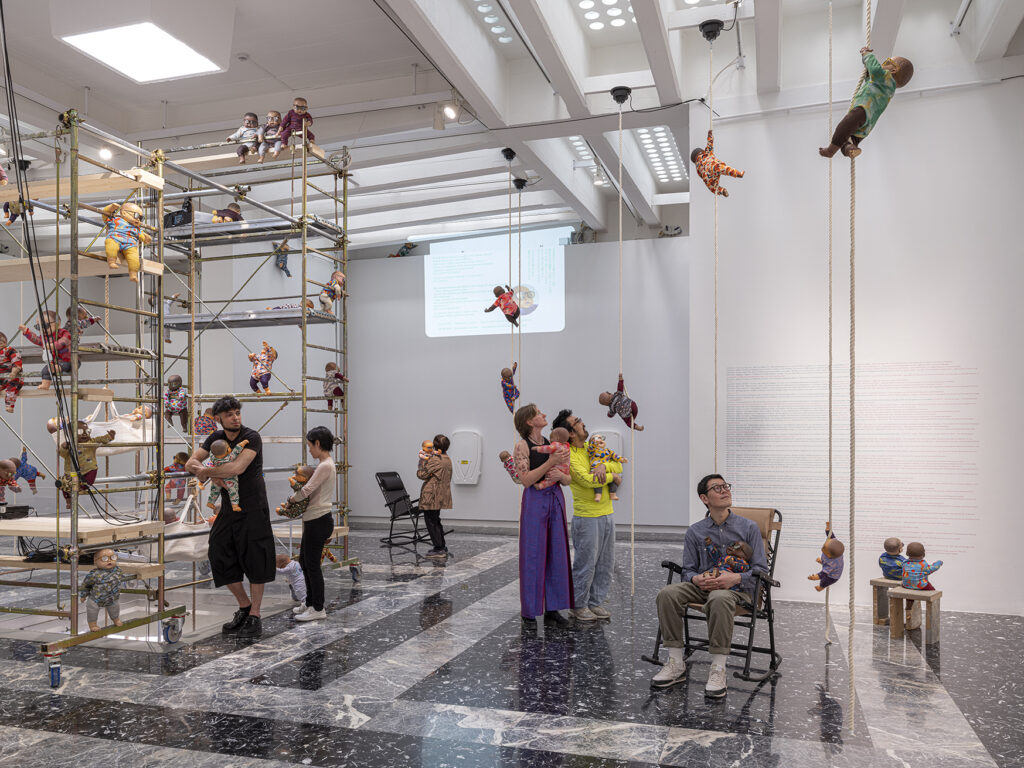
Ei Arakawa-Nash, ‘Grass Babies, Moon Babies’, 2026. Installation view at the Japanese Pavilion, The 61st International Art Exhibition of La Biennale di Venezia. Photo by Uli Holz. Courtesy of The Japan Foundation.
Ei Arakawa-Nash, ‘Grass Babies, Moon Babies’, 2026. Installation view at the Japanese Pavilion, The 61st International Art Exhibition of La Biennale di Venezia. Photo by Uli Holz. Courtesy of The Japan Foundation.
Another work that drew attention from Biennale crowds was Ei Arakawa-Nash’s Grass Babies, Moon Babies at the Japanese Pavilion. While some criticised it as gimmicky, it was the only work on view that actively engaged viewers. Two hundred and eight sunglass-wearing baby dolls—crafted to represent various ethnicities and weighted similarly to real babies—are available for visitors to hold, care for, and carry throughout the pavilion grounds. The experience has quirky aspects; upon changing a baby’s diaper, visitors find a QR code that, when scanned, yields a poem about that particular baby. The emotional labour of parental care becomes apparent in Arakawa-Nash’s social experiment, drawing from his experience as a new parent.
Sung Tieu, installation view at the German Pavilion, The 61st International Art Exhibition of La Biennale di Venezia. Photo by Andreas Rossetti. Courtesy of the artist.
Henrike Naumann, ‘The Home Front’, 2026. Installation view at the German Pavilion, The 61st International Art Exhibition of La Biennale di Venezia. Photo by Jens Ziehe. Courtesy of the estate of the artist.
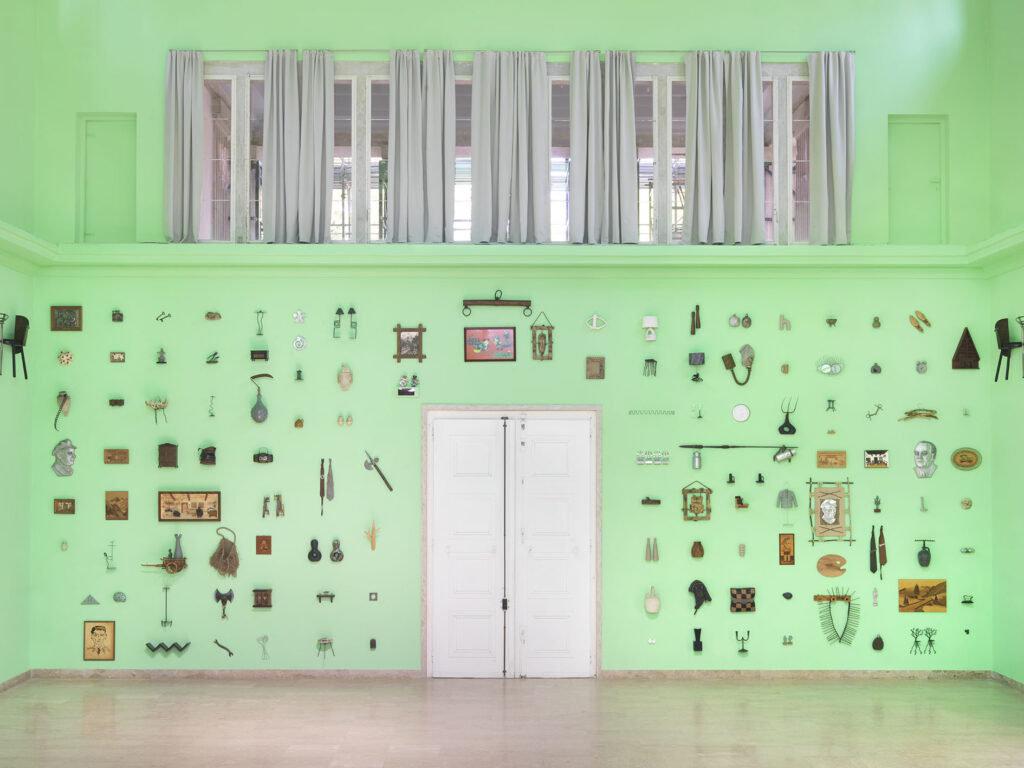
Up ahead in the Giardini, Germany’s Ruin invokes the Biennale’s curatorial theme, revealing lesser-known narratives. The work was as much an ode to Germany’s migrant communities as it was to maternal figures and care. Intricately paved with marble, mosaic, and graffiti, the pavilion’s facade resembles that of the Gehrenseestraße complex, a now-abandoned housing estate in north-east Berlin where German Vietnamese artist Sung Tieu and her mother once lived. It was a space for migrant workers, whose collective experience—often overlooked within the country’s historical reflections—becomes the primary subject of much of Tieu’s practice. Inside, Tieu’s minimalist sculptures blend the history of labour in Germany with personal memories. In this context, they serve as an ode to her mother; glass sculptures of her mother’s hands and feet are displayed alongside a sculpture composed of metal bars based on Albrecht Dürer’s 1528 Studies of Human Proportion. The work of the late artist Henrike Naumann is also on view at the pavilion. Painting the interior wall of the pavilion a shade of green that recalls abandoned Soviet barracks in East Germany, Naumann recalled her personal history.
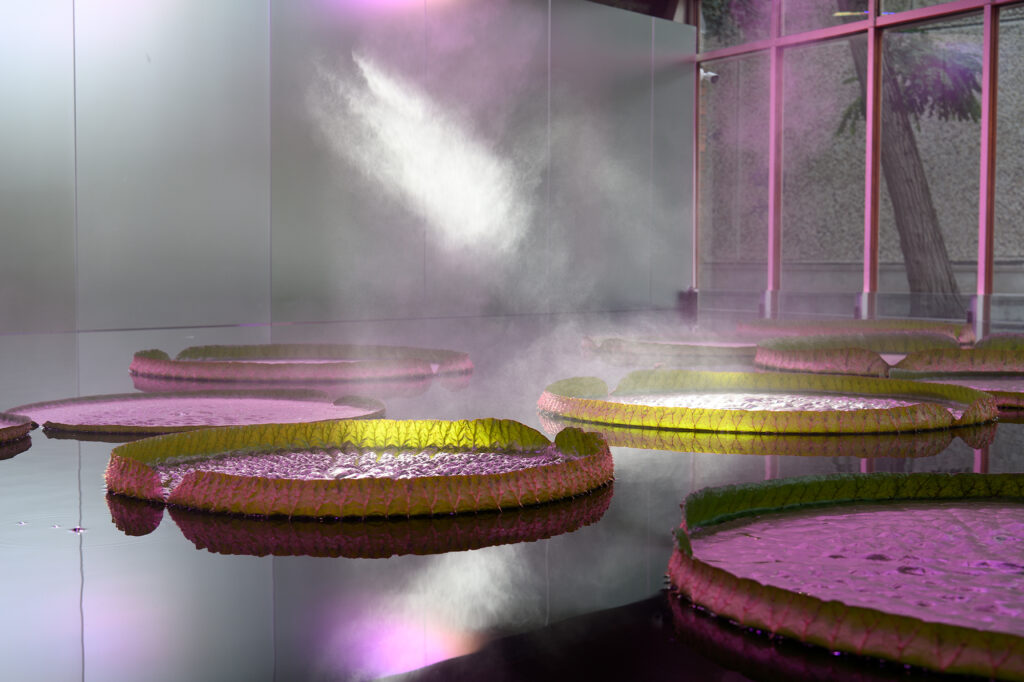
Around the corner, Abbas Akhavan’s Entre chien et loup at the Canadian Pavilion sought a more subtle, sensorial impact, invoking another aspect of the curatorial theme. The stifling humidity that greets one upon entering the structure, transformed into a greenhouse, is immediately palpable. The centrepiece is a water tank in which the artist is growing Victorian water lilies from seeds that came from London’s Kew Gardens. Elsewhere in the pavilion, a stack of branches is in fact cast in bronze, while a fur coat could be mistaken for a water fountain. Removed from any colonial implications, the work is meant to prompt reflection on the relationship between the natural and the man-made.
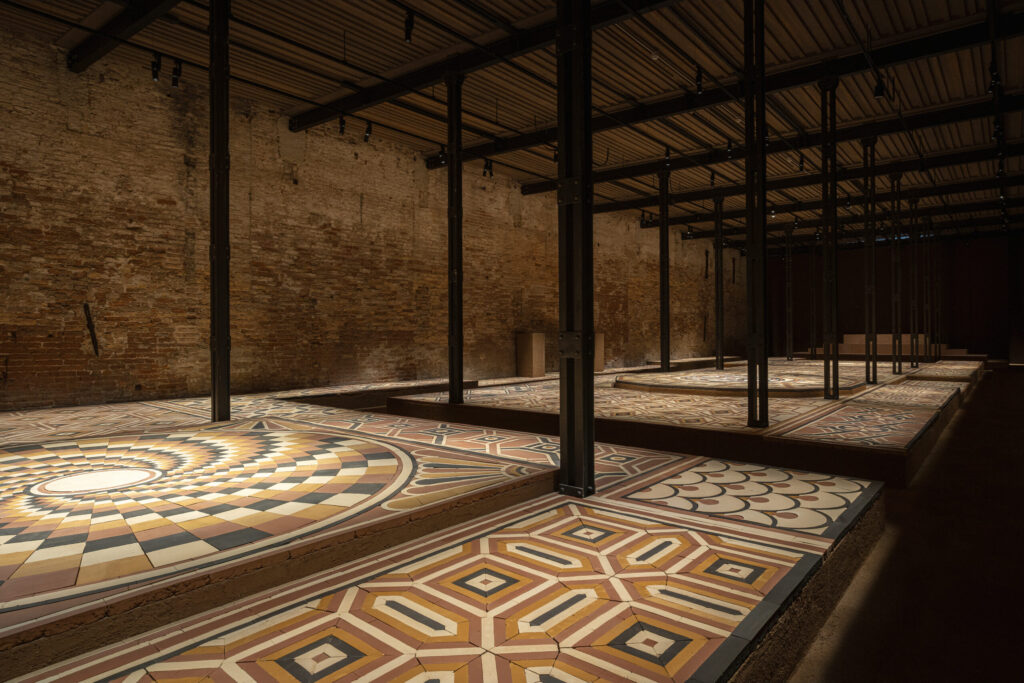
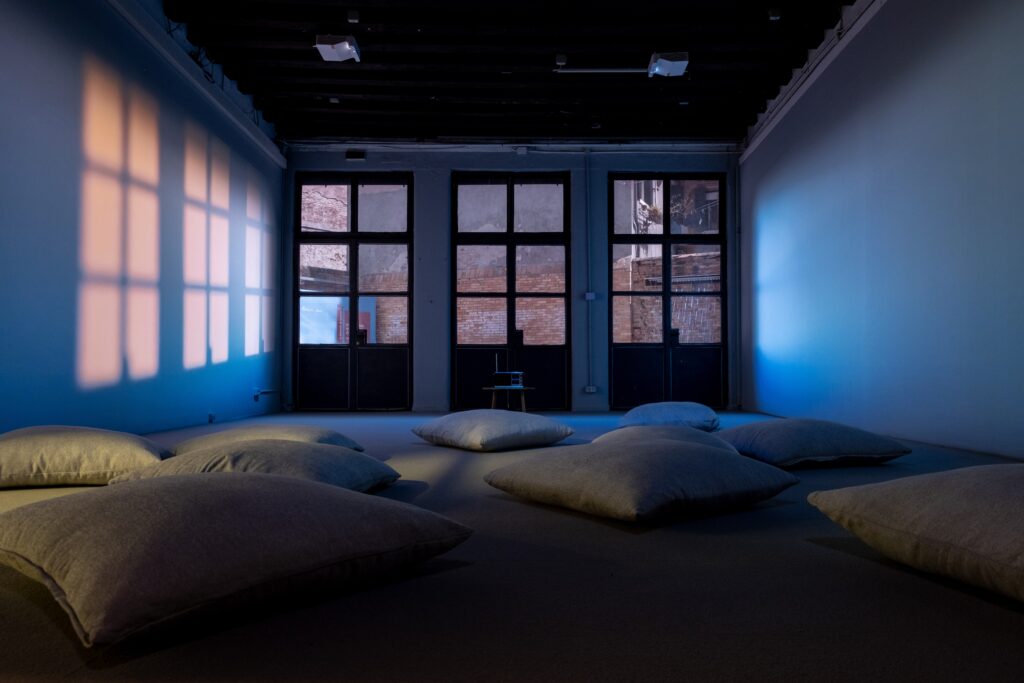
Dana Awartani, ‘May your tears never dry, you who weep over stones’, 2026. Installation view at the Saudi Pavilion, The 61st International Art Exhibition of La Biennale di Venezia. Photo by Alvise Busetto. Courtesy of the artist.
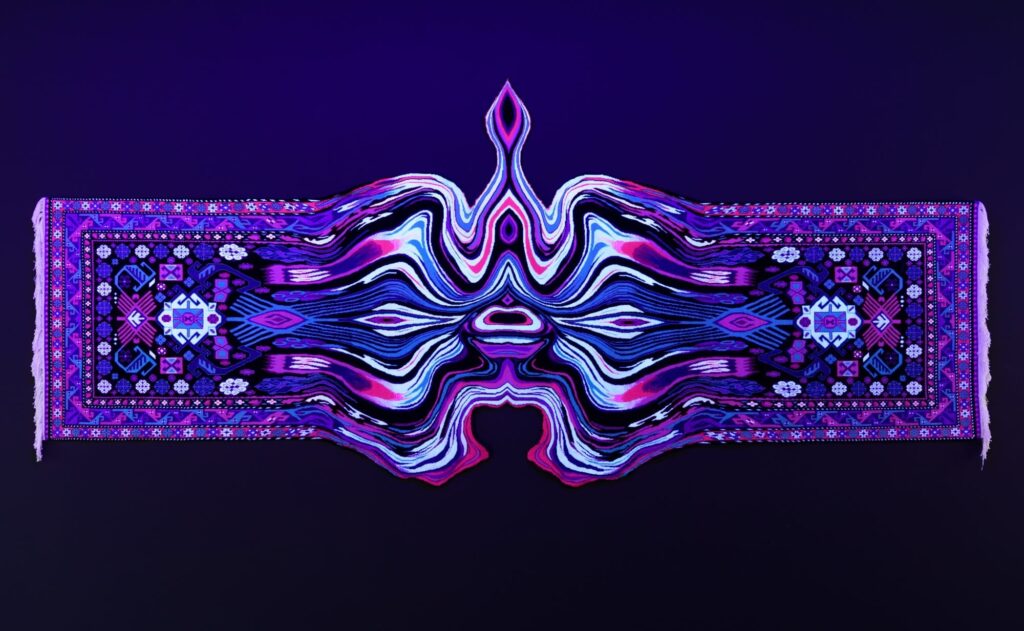
Faig Ahmed, 'Ancestors', 2026. Handmade wool carpet, 170 x 385 cm. Presented at the Azerbaijan Pavilion, The 61st International Art Exhibition of La Biennale di Venezia. Courtesy of Faig Ahmed Studio and Sapar Contemporary.
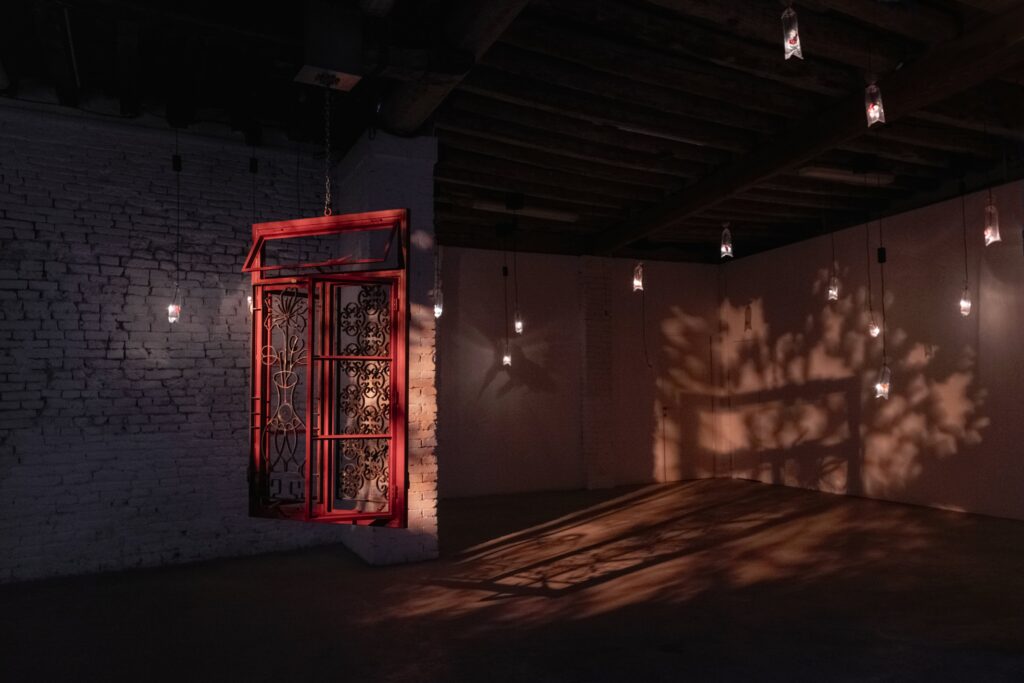
Invoking the hand of the maker, the Biennale also saw the inclusion of many textile- and craft-based works. Most notably, Dana Awartani’s mosaic compositions transformed the Saudi Pavilion in the Arsenale. Titled May your tears never dry, you who weep over stones, the installation was composed of almost 30,000 clay bricks, handmade by master Saudi artisans, and marked with ancient motifs. Expanding over the floor of the pavilion, the work felt like an imagined place evocative of numerous geographies, inspired by twenty-three sites of archaeological significance with histories spanning three thousand years. Next to the Hong Kong presentation ‘Fermata’, which features the work of Kingsley Ng and Angel Hui, the Azerbaijan pavilion features Faig Ahmed’s I Can Contain Both Worlds but I Do Not Fit into This, a single carpet that spreads out over seven interconnected rooms. Best known for his “glitchy” carpets that explore the textile form as a method of communication, Ahmed takes this presentation a step further with The Attention, incorporating metaphysics and computational logic with craft. Visitors can stand in front of an altar-like installation to be assessed by technology using a special quantum chip that generates words relevant to them in that instant based on their aura.
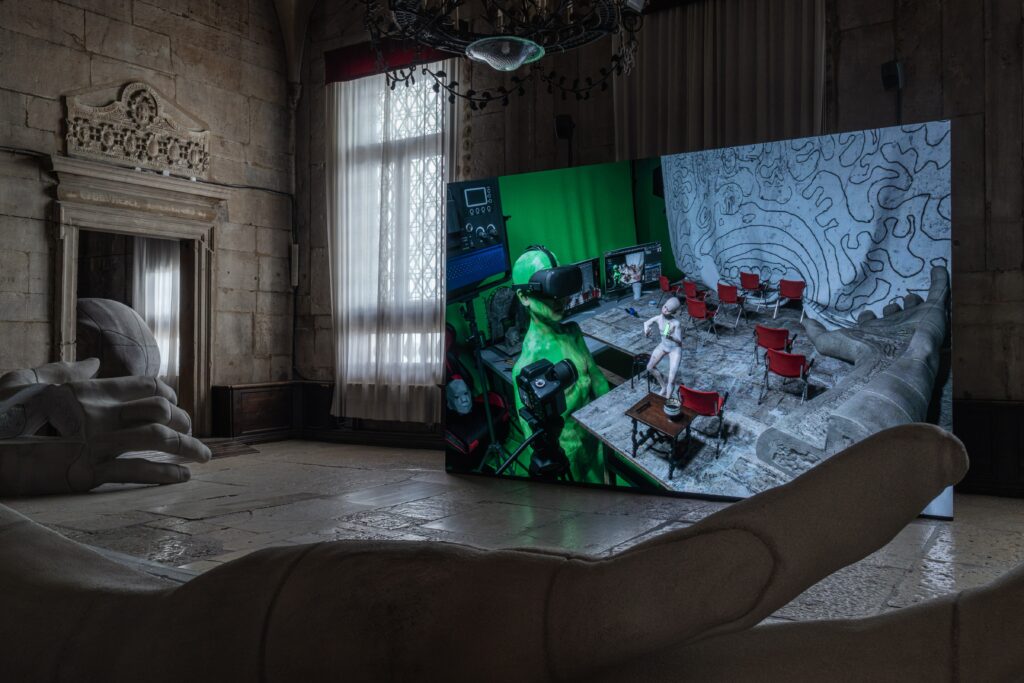
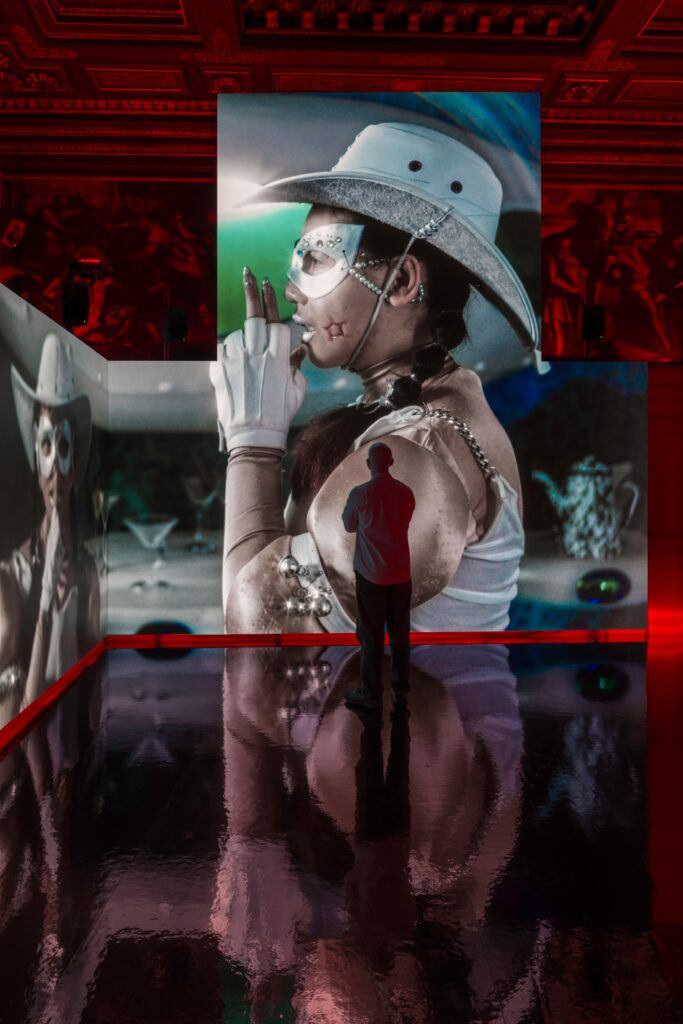
Li Yi-Fan, ‘Screen Melancholy’, 2026. Installation view at the Collateral Event of the 61st International Art Exhibition, La Biennale di Venezia. Courtesy of the artist.
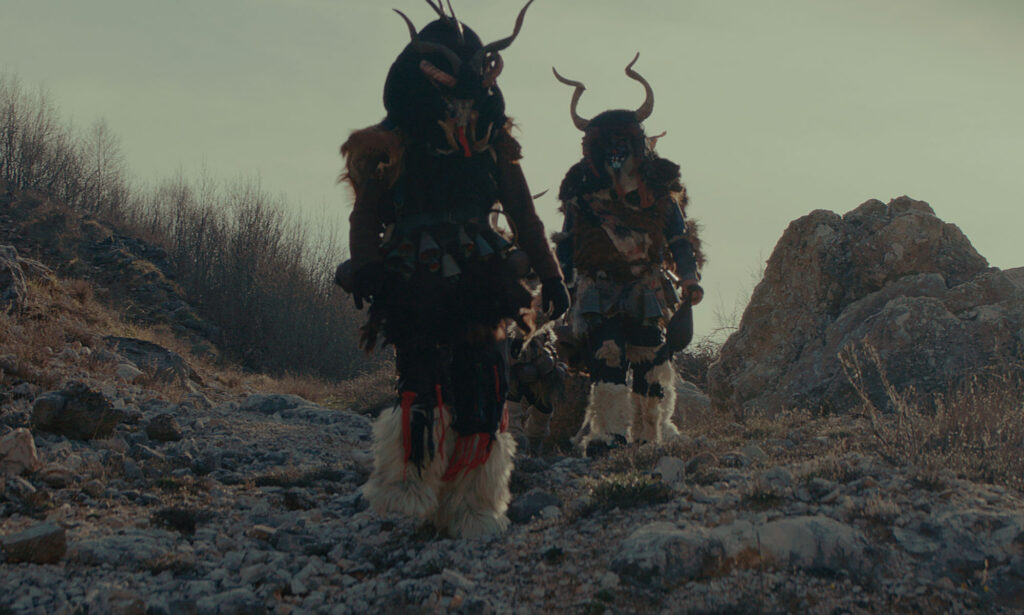
Genti Korini, 'A Place in the Sun' (still), 2026. Three-channel video installation. Presented at the Albanian Pavilion, The 61st International Art Exhibition of La Biennale di Venezia. Courtesy of the artist.
In addition to craft-based works, films were ubiquitous at the Biennale and at events around the city, providing unexpected moments of discovery that invoked the meditative dimension of the exhibition’s theme. In the Arsenale, Genti Korini’s A Place in the Sun for the Albanian Pavilion reveals how perspectives on Albania, historical and contemporary, project more about the observer than the subjects being observed. In the film, Korini presents a fictional place characterised by vast desert landscapes and characters in ornate costumes performing ritual choreography. This is interspersed with footage of an actress performing a monologue mixing English with an experimental language, Zaum, invented by twentieth-century Russian Futurist poets. Without a direct narrative or comprehensible communication, meaning becomes challenging and contentious.
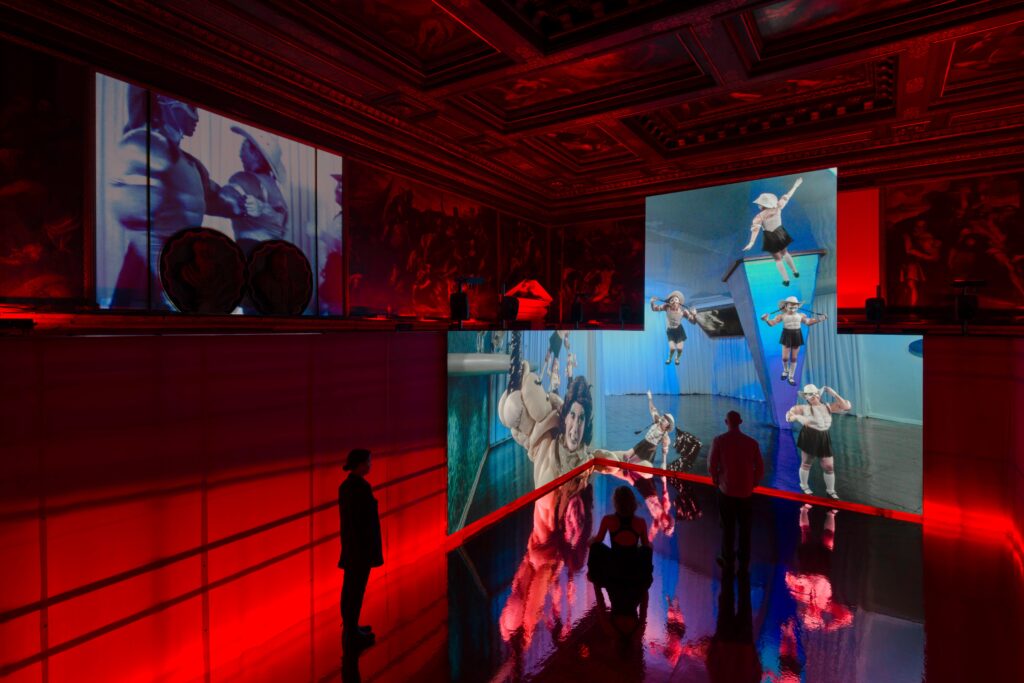
Over in San Marco, Taipei-born artist Li Yi-Fan’s Screen Melancholy is as humorous as it is disturbing. The aesthetics of the video represent our relationship with social media, a visual and visceral translation of the bodily disjointedness we experience from being chronically online. Li’s protagonist, a pale, sexless, mannequin, navigates a video-game-like world set in a space similar to the installation space. Situated in the Palazzo delle Prigioni, a former prison, the work reminds us that we are prisoners trapped in our screens.
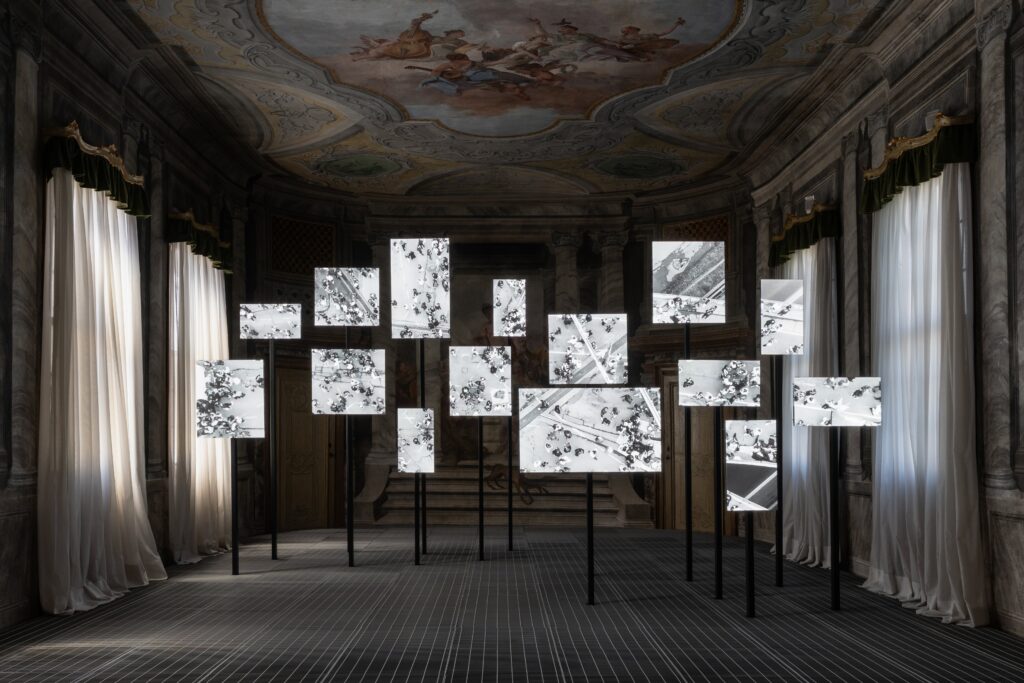
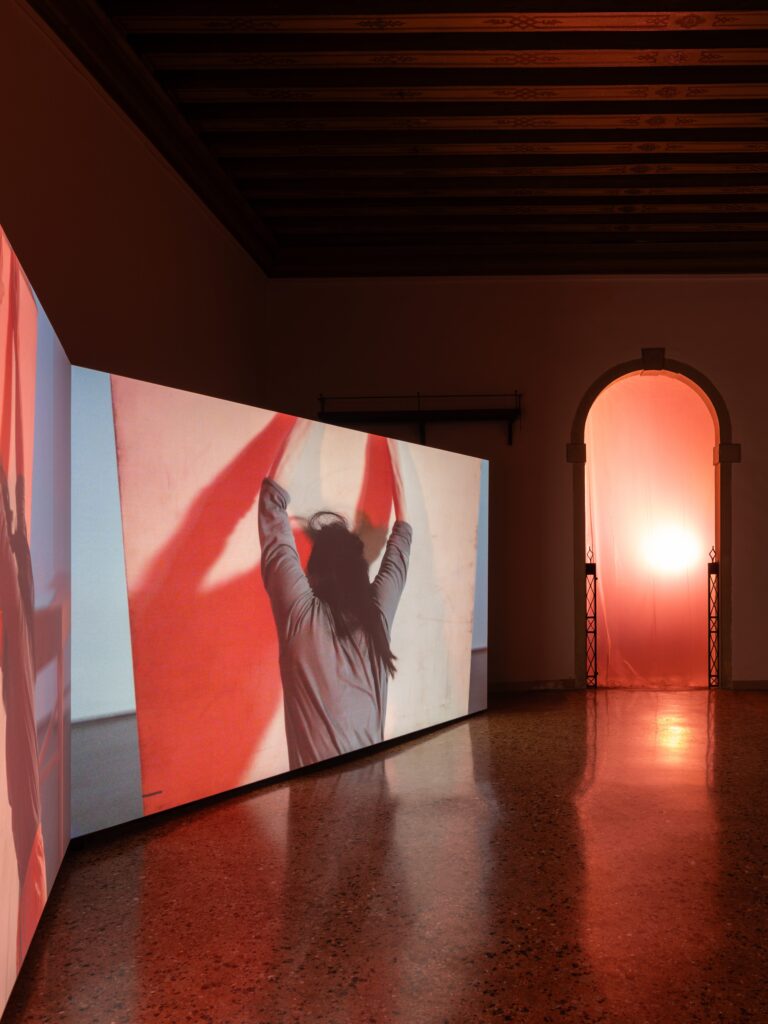
The proliferation of social media, digital dependency, and misinformation are among the themes that inform ‘Canicula’, presented by Fondazione In Between Art Film. Featuring eight newly created, site-specific video installations, the exhibition’s title evokes extreme light and heat as metaphors for the pressure and impact that oppressive temperatures, technologies, and politics have on us. Particularly noteworthy was Lawrence Abu Hamdan’s 450XL: The Story of a Fugitive Sound, and Wang Tuo’s The Experimental Paradigm of Ownership and Autonomy. The sovereignty of human bodies is central to Indonesian artist Natasha Tontey’s The Phantom Combatants and the Metabolism of Disobedient Organs, an explosive installation on view at Ateneo Veneto in San Marco. Focusing on the reimagined story of a 1950s Indonesian female resistance fighter, Len Karamoy, the installation features Tontey’s signature campy sci-fi aesthetics. Tontey’s version of Karamoy transforms her into a cross between a mutant and a mythical figure, whose organs metabolise ancestral knowledge instead of food. Another enigmatic female figure, Turandot, from Persian literature, serves as the thematic inspiration for ‘Turandot: To the Daughters of the East’, staged by Parasol Unit Foundation at Palazzo Franchetti. Centred on the twelfth-century Persian myth of the same name, and marking one hundred years since Puccini’s Turandot opera premiered, the show features the work of eleven female artists from Central, West, and South Asia. Highlights include a series of Huma Bhabha’s sculptural installations, Uzbek artist Saodat Ismailova’s 18,000 Worlds, Daria Kim’s 1937 ethereal animation film, and Afruz Amighi’s haunting, frosted chandelier–like installation Opium House Tears, made from Bic pens and Swarovski crystals.
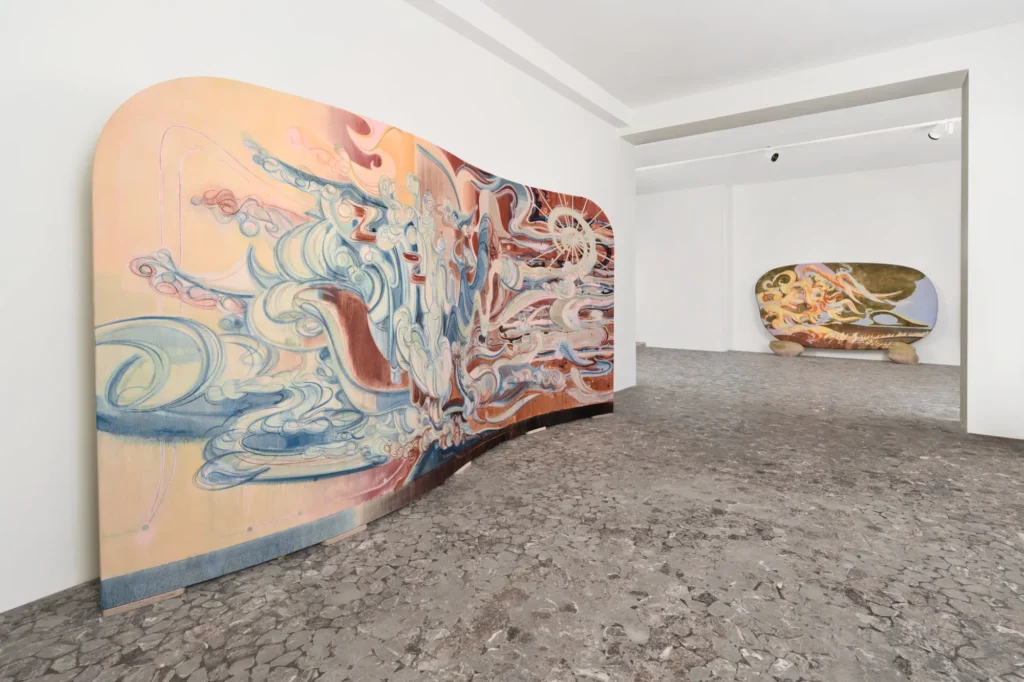
Su Yu-Xin, ‘Afterstone’, 2026. Installation view at Albion Jeune, Venice, Italy. Courtesy the artist, Yubo Dong, and Albion Jeune.
Just across the Accademia Bridge, in Dorsoduro facing Giudecca, LA-based artist Su Yu Xin’s sculptural paintings are on view in her solo exhibition ‘Afterstone’. The soft, earthy paintings, which champion paint as the subject itself, provide a reprieve from the mass frenzy of the Biennale. Rich and tactile, her grainy aesthetic is literally formed from raw pigments she grinds herself, from sea glass, lapis lazuli, and volcanic rocks among other things, following the tradition of Nihonga painting in which she’s trained.
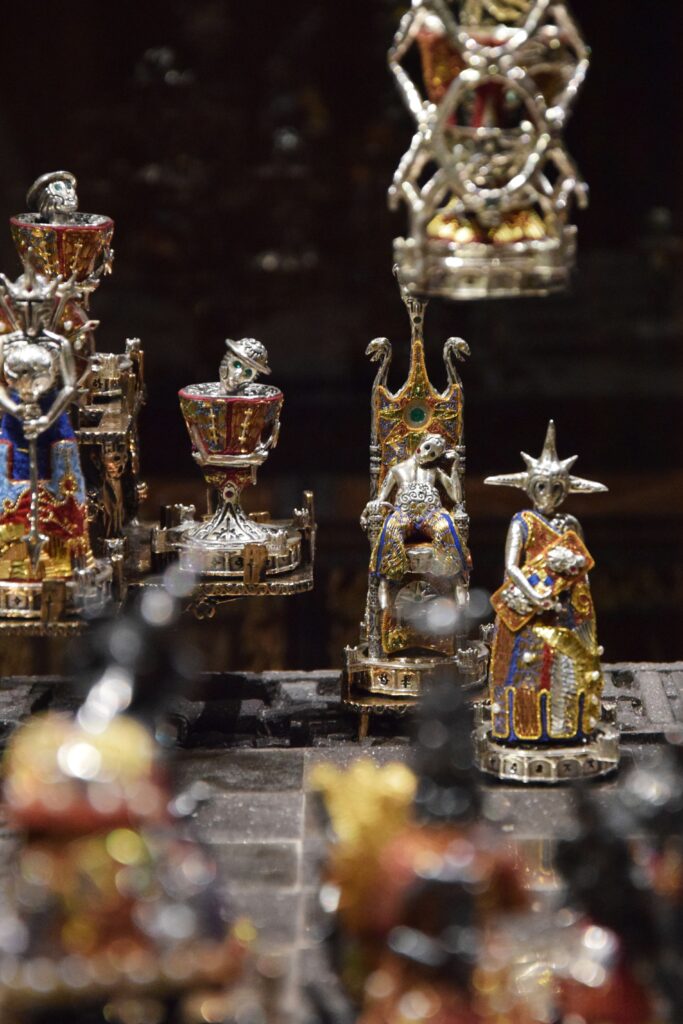
If you can see only one exhibition in Venice, make it ‘The Only True Protest Is Beauty’, on view at the newly opened Fondazione Dries Van Noten. Art, craft, architecture, and design converge in this staggering display, where archival Christian Lacroix pieces are showcased alongside an extravagant, bejewelled AI chess set made by French designer Joseph Arzoumanov. The show beautifully marries contrasting, rich aesthetics, including Japanese ceramicist Ritsue Mishima’s fragile, melting Venetian glass vessels, Belgian sculptor Peter Buggenhout’s staggering, raw, industrial sculptures, and Rei Kawakubo’s architectural Comme des Garçons silhouettes.
Joseph Arzoumanov, 'L'Échiquier des Songes', 2026. Gold, silver, precious and semi-precious stones, mother of pearl, gold and silk embroidery, Armenian volcanic stone, wood marquetry, calfskin parchment, Murano glass, bronze, steel, robotic components. Photo by Fondazione Dries Van Noten. Courtesy of the artist.
Peter Buggenhout, 'The Blind Leading the Blind #48', 2012. Mixed media (cardboard, iron, polystyrene, polyurethane, textile, wood) covered with domestic dust. Photo by Matteo de Mayda. Courtesy of the artist and Axel Vervoordt Gallery.
Inspired by American songwriter and political activist Phil Ochs’s 1960s anthem, which states, “In such ugly times, the only true protest is beauty,” the title of the exhibition at the Fondazione Dries Van Noten also invokes Kouoh’s curatorial statement, which casts the Biennale’s intention as “neither a litany of commentary on world events, nor an inattention or escape from compounding and continuous intersecting crises. Rather, it proposes a radical reconnection with art’s natural habitat and role in society: that is the emotional, the visual, the sensory, the affective, the subjective.” Throughout the week, while the purpose and format of the Biennale were constantly called into question, the role of art itself never was.
About The Author
Aaina Bhargava is a Hong Kong-based arts and culture journalist who regularly contributes to art publications such as Artforum, ArtReview, The Art Newspaper, frieze, and Ocula. She has also been published in The Financial Times, Dazed Middle East, and South China Morning Post. She specialises in identifying topical issues and charting growing trends across creative disciplines; visual arts, music, design, and fashion in Asia and around the world, and in-depth artist profiles. She was the former Arts & Culture Editor for Tatler Asia, and continually seeks to create meaningful editorial content, covering cultural developments through a relevant global perspective.