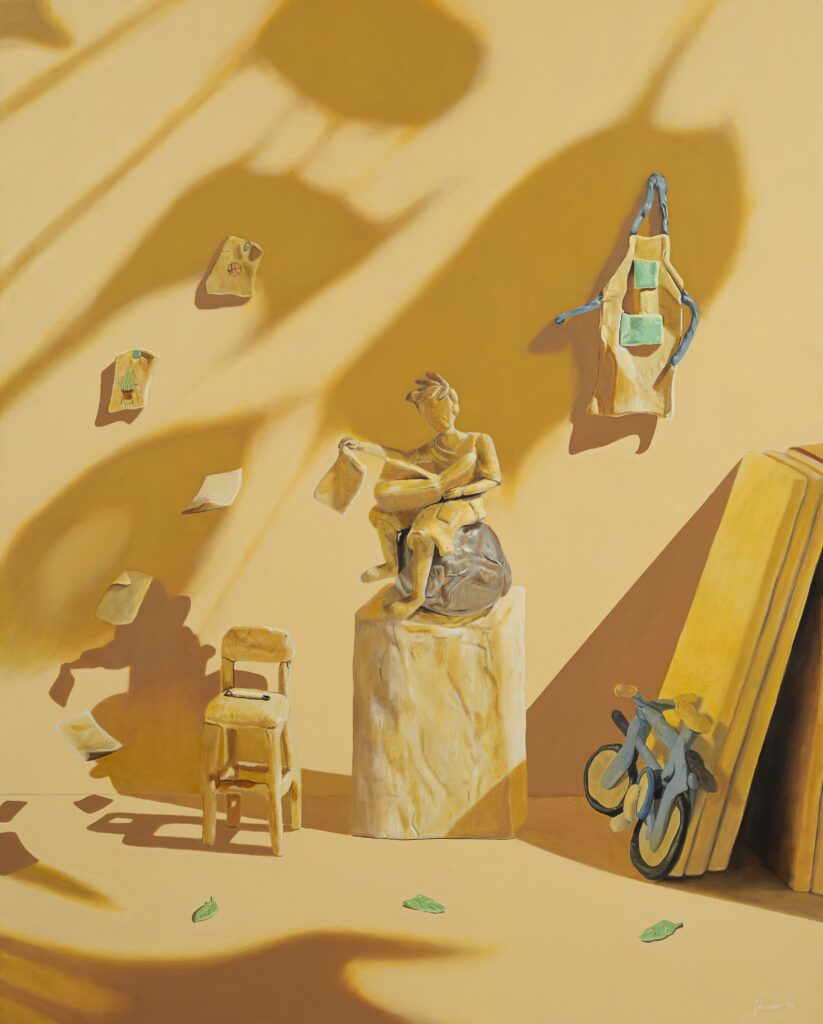
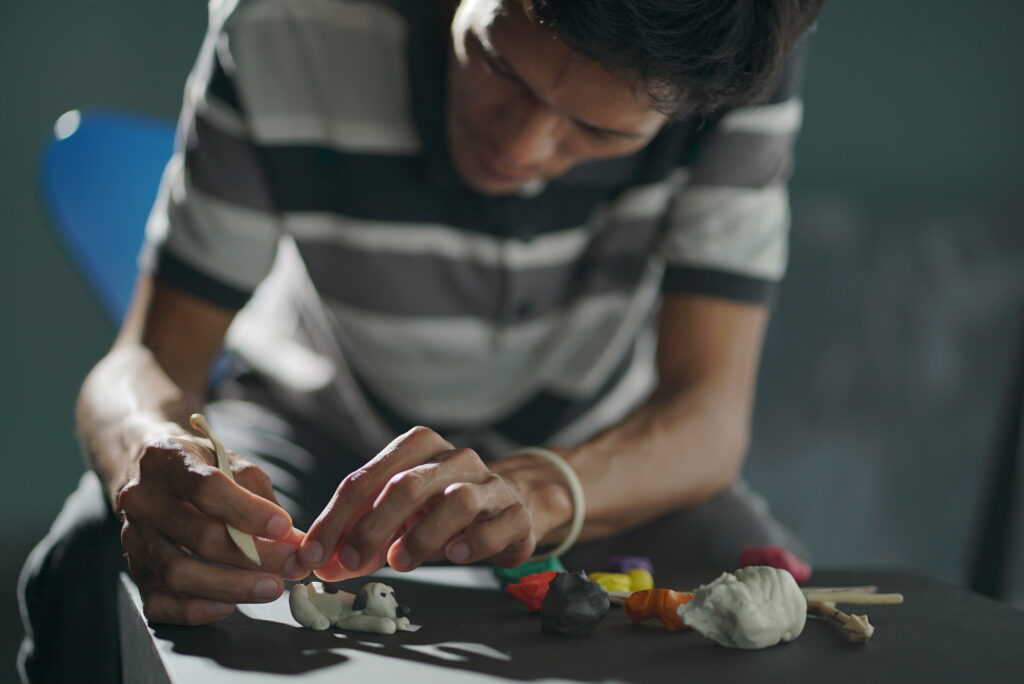
In his thirties, while working in construction in the Philippines, John Darrel Evasco began making clay sculptures for his young son, for whom he could not afford new toys. For Evasco, the delicately crafted figurines—a teddy bear, a rocking horse, a basketball—hold a significance beyond the personal. In Sorsogon, a province on Luzon Island where he resides, families displaced by the region’s frequent floods often rely on donated toys for their children. Years later, the figurines became the central motifs of his oil paintings shown at a solo exhibit at the Luzon Art Fair in 2024.
John Darrel Evasco, 'To Write a New Chapter in One’s Life', 2026. Oil on canvas, 60 x 48 inches. Courtesy of the artist and THE ANNEXT.
Today, Evasco is a full-time artist with The Alternative Nest for the Next Artists, or THE ANNEXT, an art incubator-cum-gallery started by Prim Paypon. An art collector and founder of the NGO The Dream Project, Paypon established a six-month mentorship programme in 2024 for artists he describes as undiscovered talents, often working far from Metro Manila, the centre of contemporary art in the Philippines and home to the region’s prominent galleries and art schools. “There has to be [something] done in terms of making the art platform of the Philippines more inclusive,” says Paypon, who is from Bacolod City.
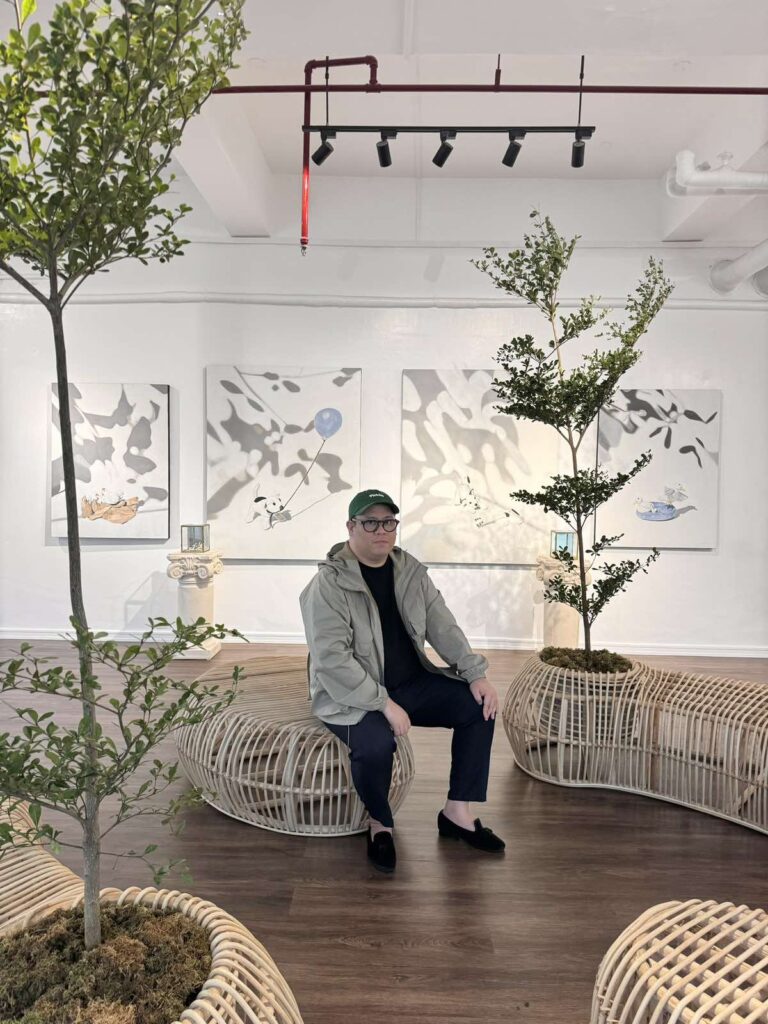
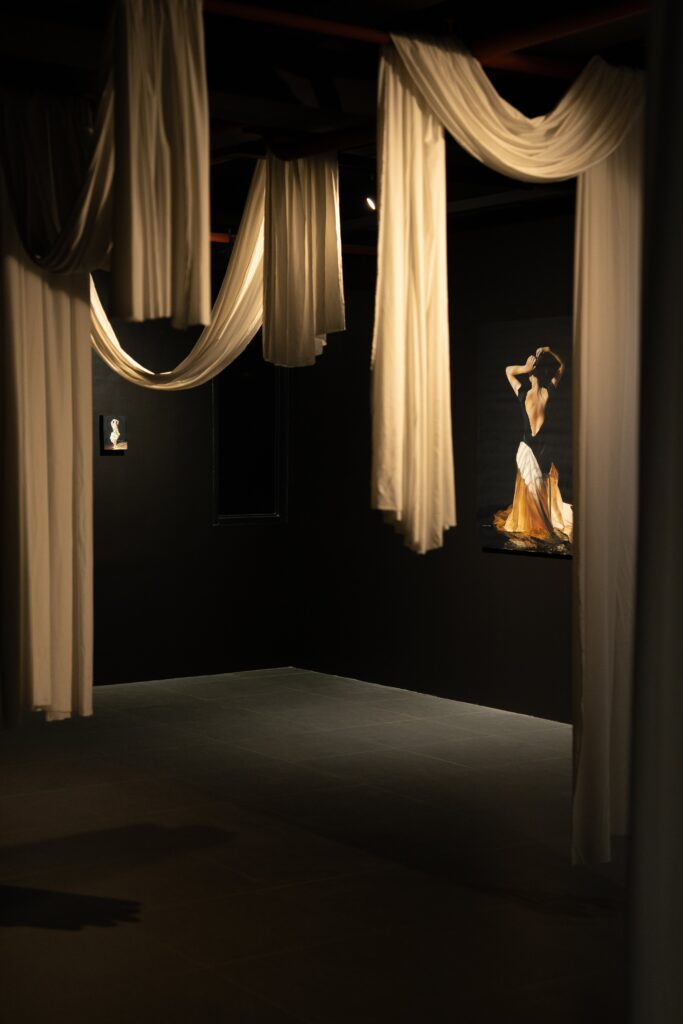
Prim Paypon curating 'When Time Flies and Leaves Its Shadows Behind', July 2026, at THE ANNEXT, Quezon City.
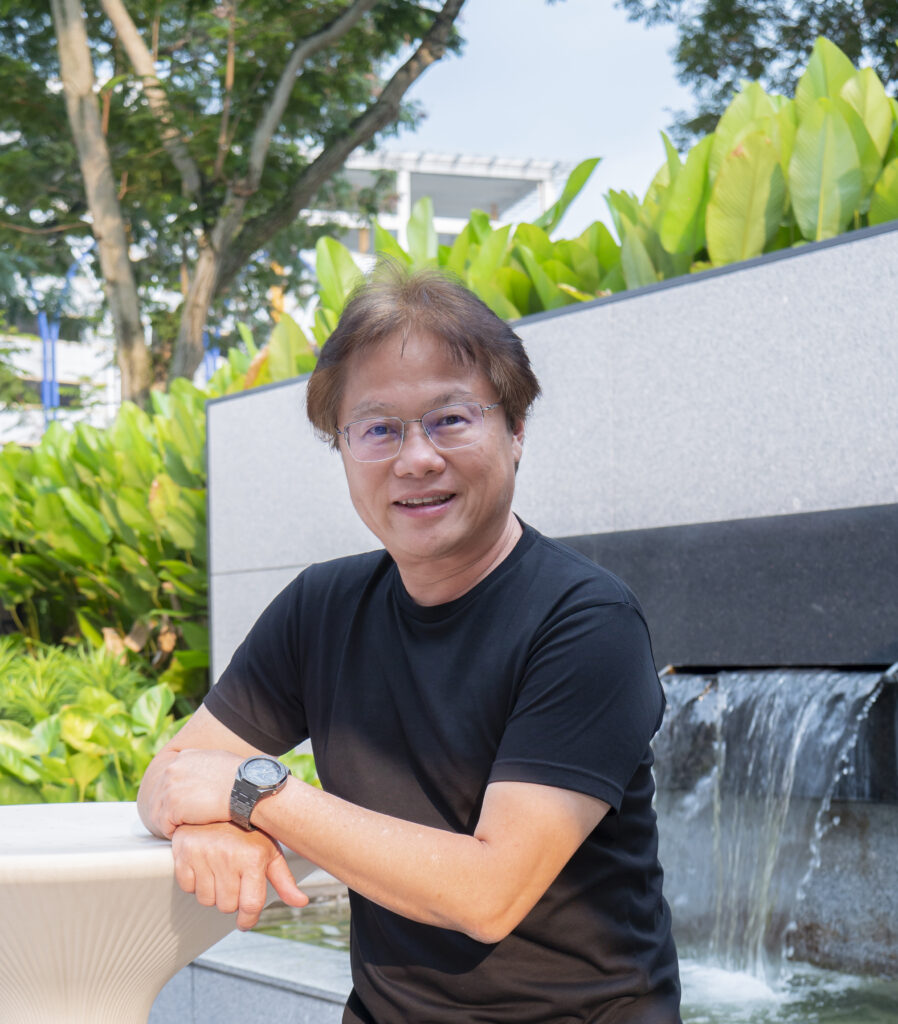
Portrait of John Darrel Evasco. Courtesy of the artist and THE ANNEXT.
Historically, contemporary art in the Philippines has been sustained by a vibrant scene of artist-run initiatives, such as the short-lived but seminal Shop 6 founded by Roberto Chabet during the martial law years, or VIVA EXCON and Manila’s Green Papaya Art Projects. In recent years, artists Mark Justiniani and Joy Mallari have founded the Tungtung Alon Art Foundation to hold artists’ immersions and educational workshops at the intersection of art, science, ecology, and community development. Other initiatives range from art spaces and galleries to residencies: Leslie de Chavez’s Project Space Pilipinas, Alfredo Esquillo Jr’s Eskinita Art Gallery, Charlie Co and Victor Benjamin “Bong” Lopue III’s Orange Project, and Emmanuel Garibay’s Linangan Art Residency, to name a few.
These initiatives are a testament to the possibilities of art when it is experimental, community-driven and free from corporate control or market concerns, but their existence also reflects the absence of strong public institutions or state support for artists in the Philippines. Commercial galleries, private foundations such as Ayala, and academic institution-backed prizes like Ateneo Art Awards have stepped in to fill the gaps, and so have art collectors and patrons: Jam Acuzar’s Bellas Artes Projects, for example, hosted an artspace and residency on the site of the Philippines’ first art school in Bataan’s Enriquez Mansion for ten years before closing in 2023.
Bruno, ‘Nothing Loudly But Everything Clearly', October 2026, at THE ANNEXT, Quezon City. Courtesy of THE ANNEXT.
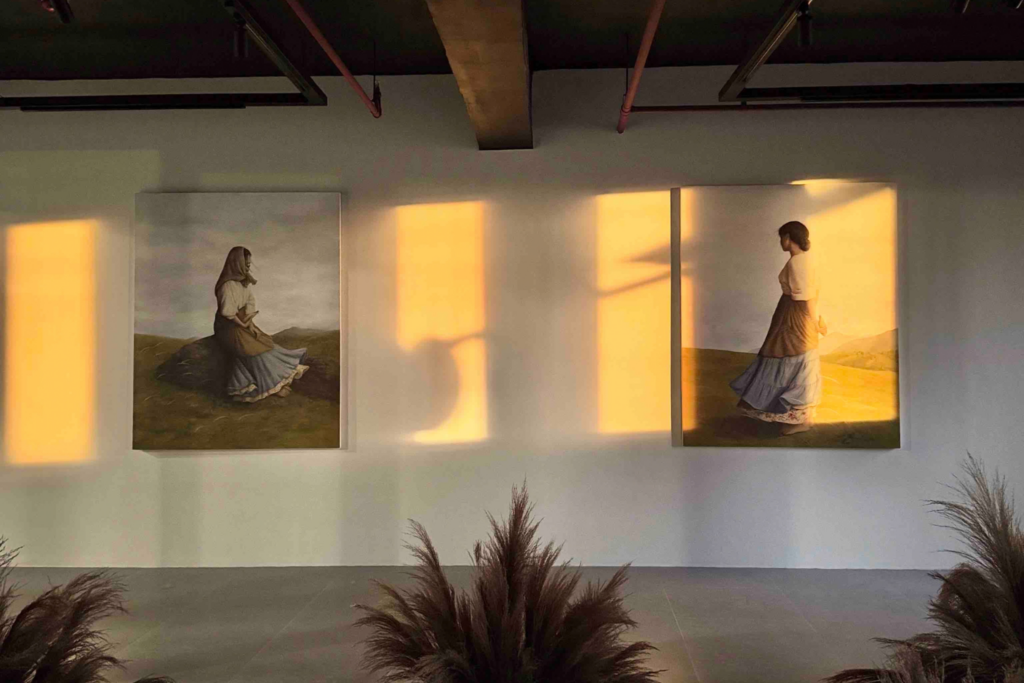
Jul Yett, ‘The Beauty in the Ruins of Us', August 2025, at THE ANNEXT, Quezon City. Courtesy of THE ANNEXT.
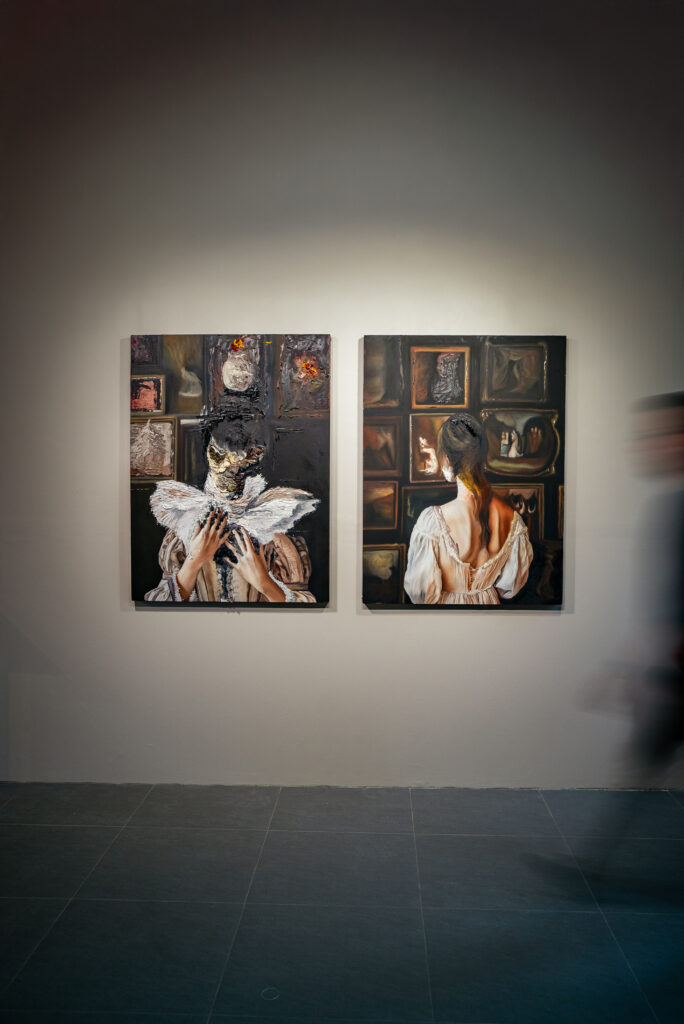
Bruno, 'Fragments of What Was II' and 'Fragments of What Was III', 2025. Oil on canvas, each 48 × 36 in. Courtesy of the artist and THE ANNEXT.
THE ANNEXT is an extension of what Paypon has done as an art collector over the past two decades—purchasing artworks from unknown artists and offering input on their career development. During the mentorship, he sets up weekly meetings and assigns what he calls homework before offering financial support. THE ANNEXT has since supported around a dozen artists, including Jul Yett, a farmer-turned-artist from Zamboanga City, Duncan De Guzman, Dineb Abella and others. Though initially conceptualised to develop artists at the stage of “raw potential” before they venture into gallery representation, THE ANNEXT has since opened a space in Cubao, Quezon City to exhibit the work of their artists. “I was very interested to make sure that the artists have sustainable, profitable income. Because at the end of the day, being an artist is a profession,” he says.
With the upcoming opening of Ayala Foundation’s Kontempo in Manila alongside the established major shows of Art Fair Philippines and Alt Philippines, the Philippines is set to become a new hub of contemporary art in Southeast Asia. Meanwhile, other initiatives like Sining Filipina, a nationwide all-female art competition first held in 2024, continue to broaden participation in art. “For us at THE ANNEXT, we just want to contribute little things to this positive direction happening in the Philippines,” Paypon says.
Portrait of Dr Tan Loke Mun. Courtesy of UR-MU.
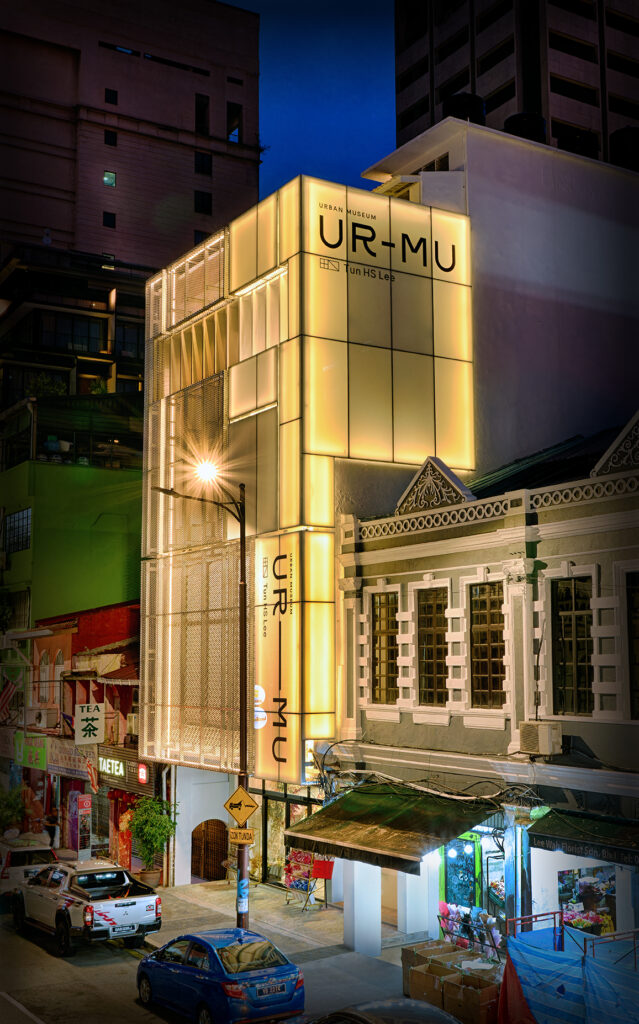
Facade of +n by UR-MU. Courtesy of UR-MU.
Over in Malaysia, a lack of centralised policies means that support for artists, too, often comes from banks and major corporations—for instance, the Maybank Foundation’s Artist Fellowship Programme. And similarly here, private foundations, collectors, and patrons have proven crucial to the development of contemporary arts in the country. While the long-running Ilham Gallery and younger initiatives such as Leong Kwong Yee’s Blank Canvas in Penang and Liza Ho’s The Back Room in Kuala Lumpur have contributed to a growing scene, Malaysia has remained relatively out of the spotlight in the global art conversation compared to its counterparts in Thailand and Indonesia.
This is quickly changing. One recent addition to the landscape is the Urban Museum (UR-MU), founded by Dr Tan Loke Mun, an art collector. Tan began collecting art when he was an architecture student at Deakin University in Australia; the first piece he bought was by a fellow classmate. Over the years, his collection steadily grew as he visited galleries on work trips to Indonesia, Vietnam and Cambodia. “Malaysia has always been a bit lacking in the area of the arts,” he says. “I wanted something that would add some intellectual stimulation to the Malaysian palette.”
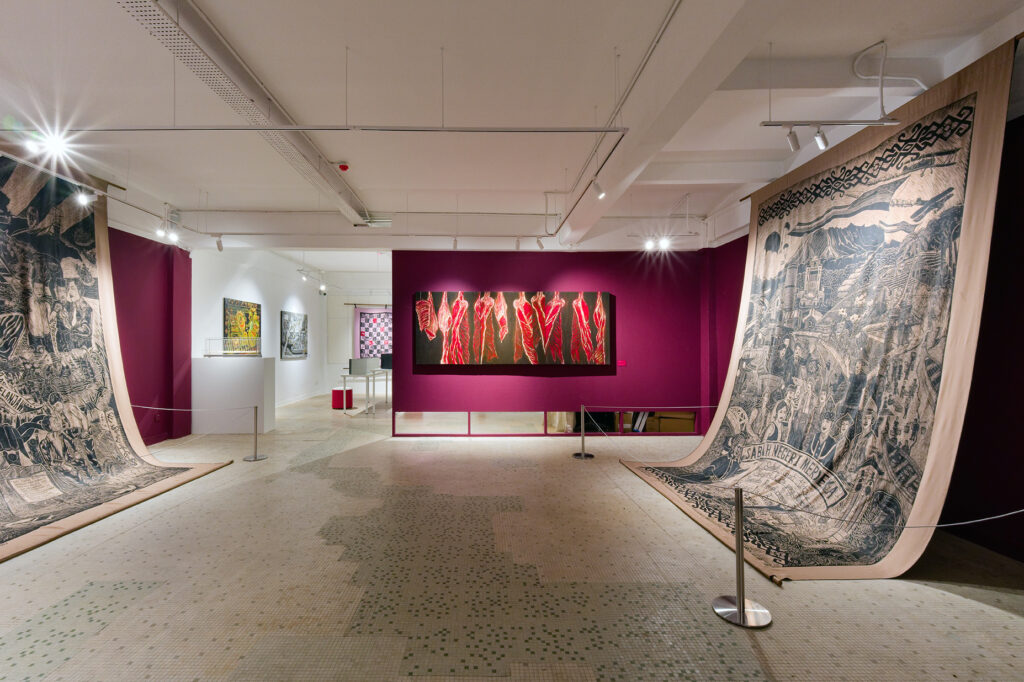
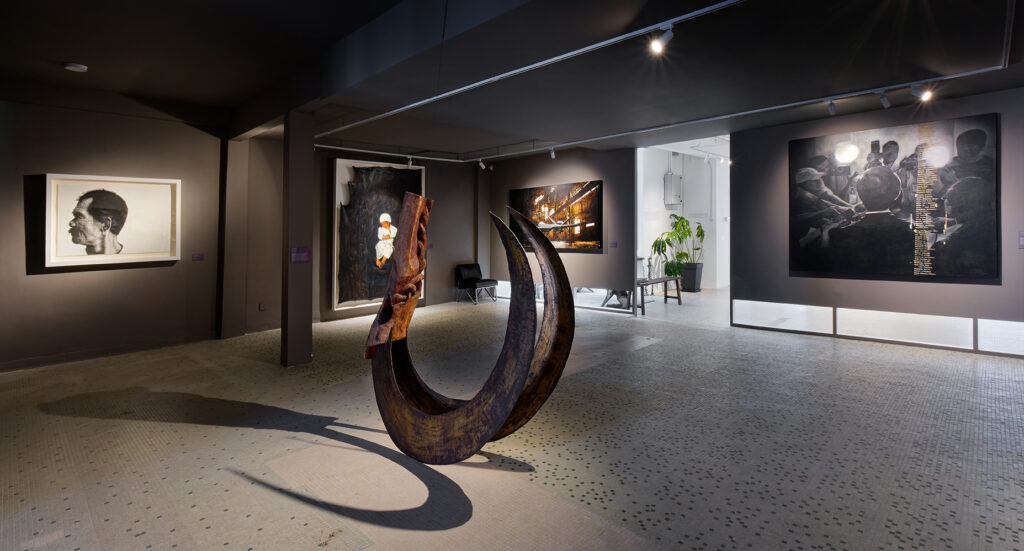
Exhibition view: ‘Strategies of Dissent: Works from the Ng Sek San Collection’, +n by UR-MU, Kuala Lumpur, 30 April 2025 – 31 December 2030. Courtesy of UR-MU.
Exhibition view: ‘Strategies of Dissent: Works from the Ng Sek San Collection’, +n by UR-MU, Kuala Lumpur, 30 April 2025 – 31 December 2030. Courtesy of UR-MU.
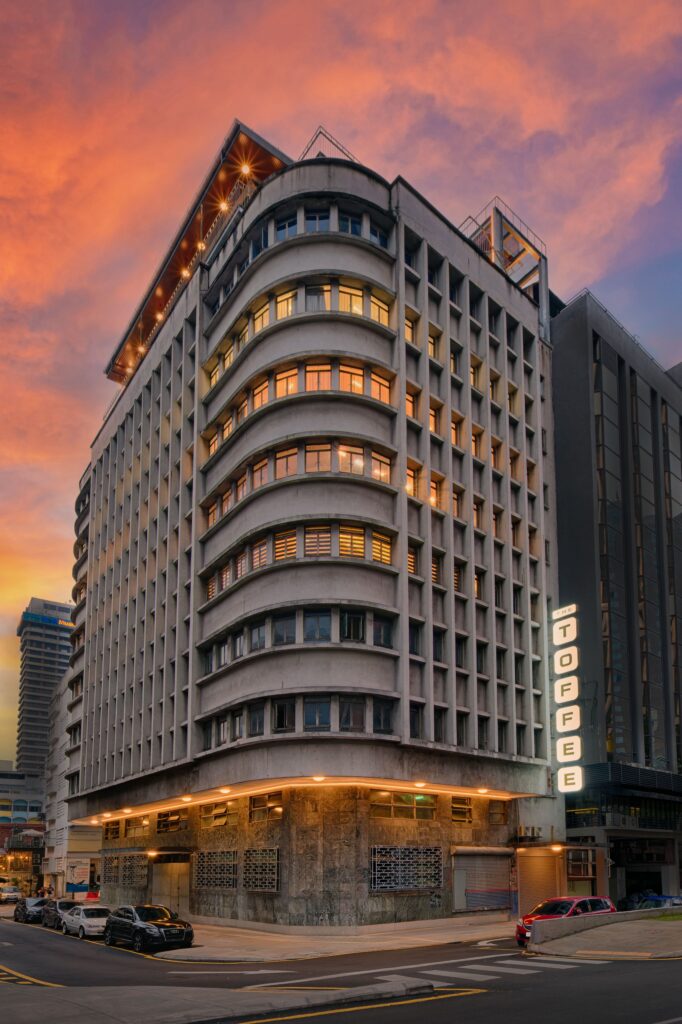
THE TOFFEE. Courtesy of UR-MU.
The first Urban Museum initially began as a showcase of his collection, including pieces by Chong Siew Ying, Phuan Thai Meng, Jalaini Abu Hassan and others, housed in an Art Deco building he purchased in Bukit Bintang. For his project, Tan took inspiration from UR-MU after Hong Kong’s H Queens. “We [Malaysia] are good at architecture,” Tan says. But Malaysian art is still underpriced, and it has taken time for artists and curators to find imaginative ways to operate within the parameters of religion and local laws, he adds. Tan had also initially been unsure about the software—whether he could get people who could run a museum and curate.
Though there was initial doubt about whether the space would survive, there are now two other UR-MUs, including one exclusively for events—lectures, movies and talks—and a new extension to the first is currently in the works. “The city is starting to find its soul again,” he says. “Not just in superficial tourism, but trying to find its identity and reestablish itself on the world map.”
At present, Tan is also the architect for Creador Foundation’s Muara Arts, a public gallery set to open later this year as the first non-profit arts institution dedicated to Malaysian contemporary art. Galeri Petronas reopened in a new location in August, and this October, a new platform will arrive in the form of Art KL, a collaboration between Art Anonymous and Richard Koh Art Advisory. “I think we are starting to see an explosion. There’s so much going to be happening in the next six months. Almost every week there’s something new,” he says.
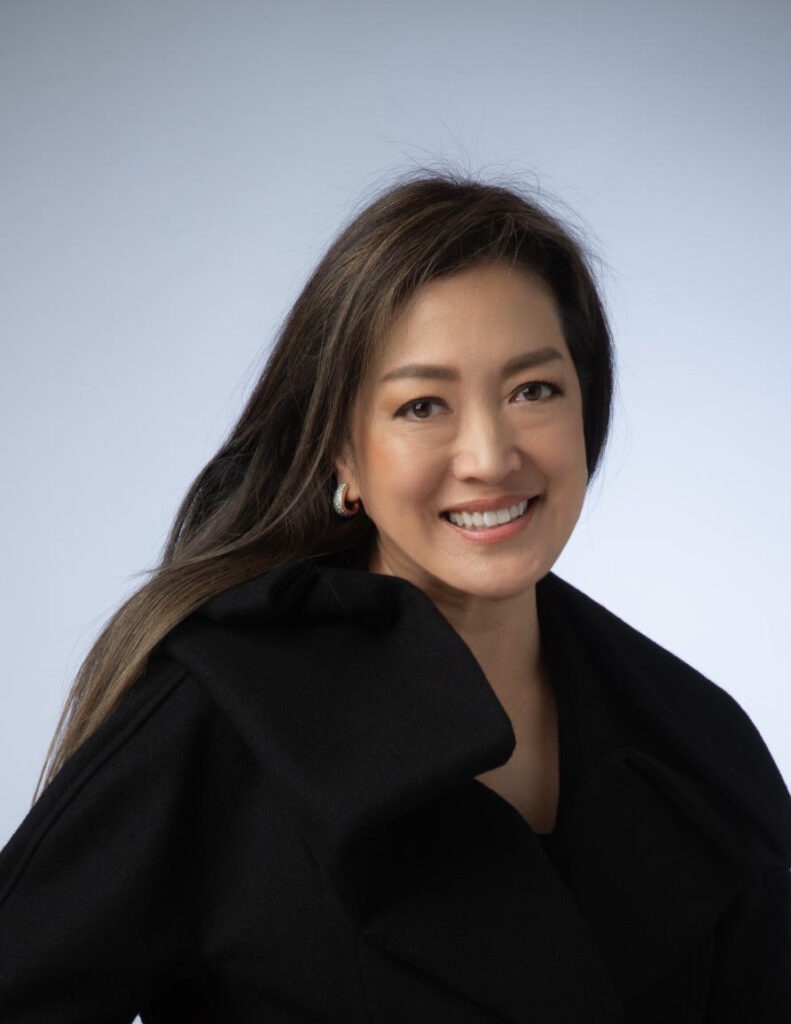
Portrait of Aey Phanachet. Courtesy of 100 Tonson Foundation.
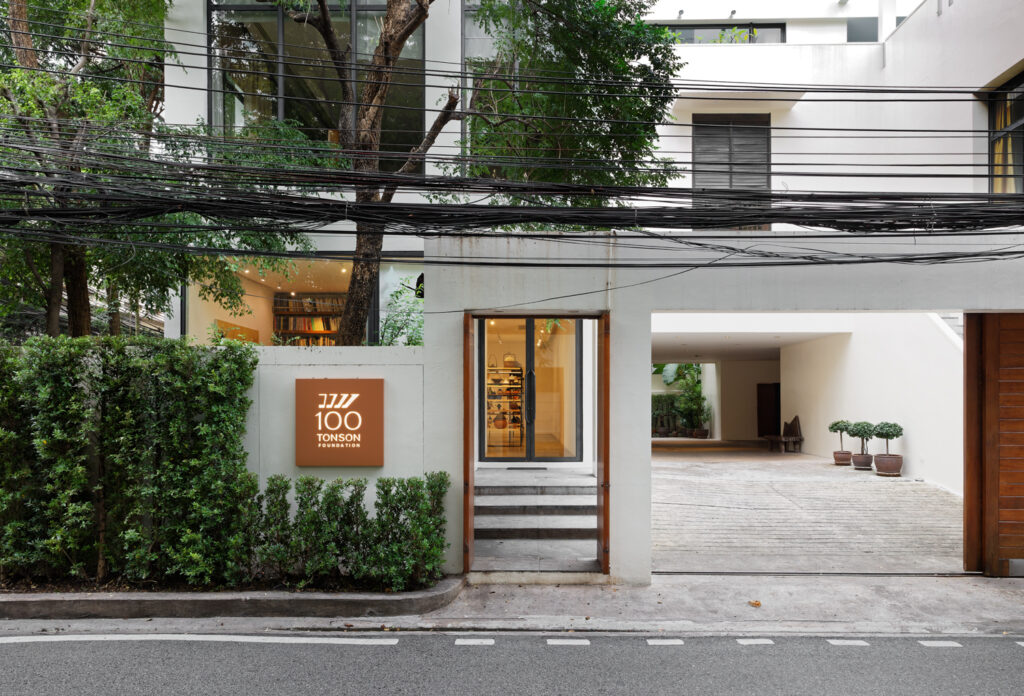
Entrance to 100 Tonson Foundation. Photo by Picoong Therdphong. Courtesy of 100 Tonson Foundation.
Collector-backed support for artists remains a driving force behind the development of Southeast Asia’s art scene more broadly. In Thailand, one highlight last year was the opening of the Khao Yai Art Forest, where Louise Bourgeois’s Maman spider looms over lush paddy fields about 150 kilometres away from Bangkok. The open-air museum is the brainchild of Khao Yai Foundation, founded by Marisa Chearavanont; the foundation is also behind Bangkok Kunsthalle, a public art space in fire-damaged Brutalist buildings in Chinatown, launched in January 2024 and already a significant venue in the city.
One longtime presence both contributing and bearing witness to the metamorphosis of the Thai art landscape is 100 Tonson Foundation, which began as a gallery in 2003. It was founded by Aey Phanachet, a former investment banker and art patron, who acquired the building and decided to dedicate the space to bridging Thailand with the international art world. At the time, there was still some mystique around Thai contemporary art, and few museums or institutions in Thailand collected art, she says. 100 Tonson’s early focus was on bringing Thai artists to institutions around the world, but when it shifted to a foundation, more emphasis was placed on developing Thai artists and curators, and hosting associated public outreach programmes.
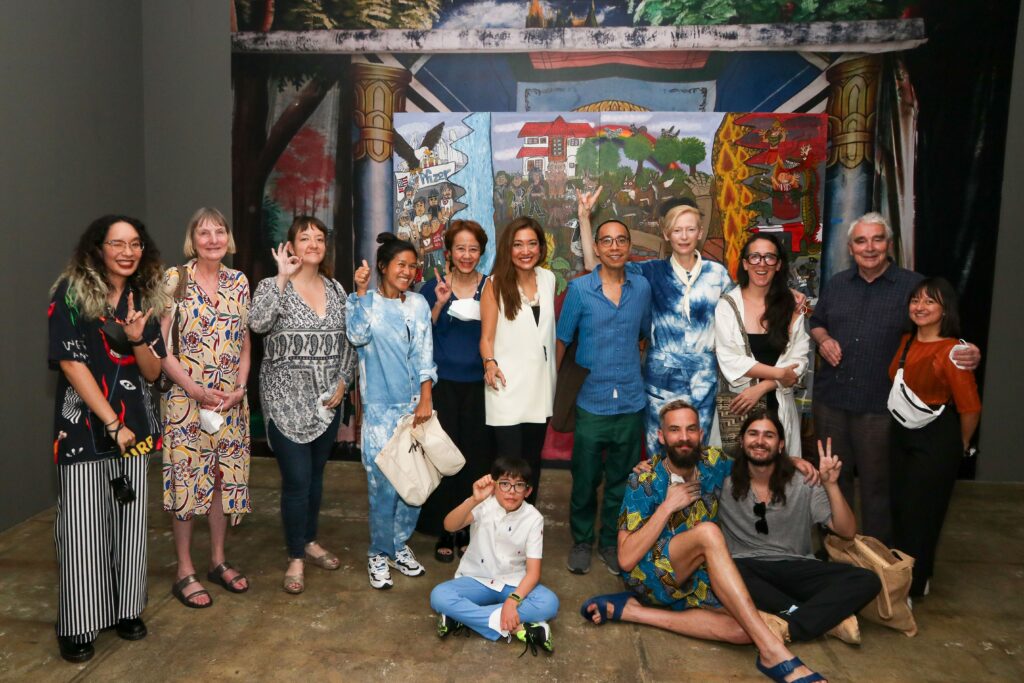
Team of Memoria (2021) visiting 100 Tonson Foundation. Courtesy of 100 Tonson Foundation.
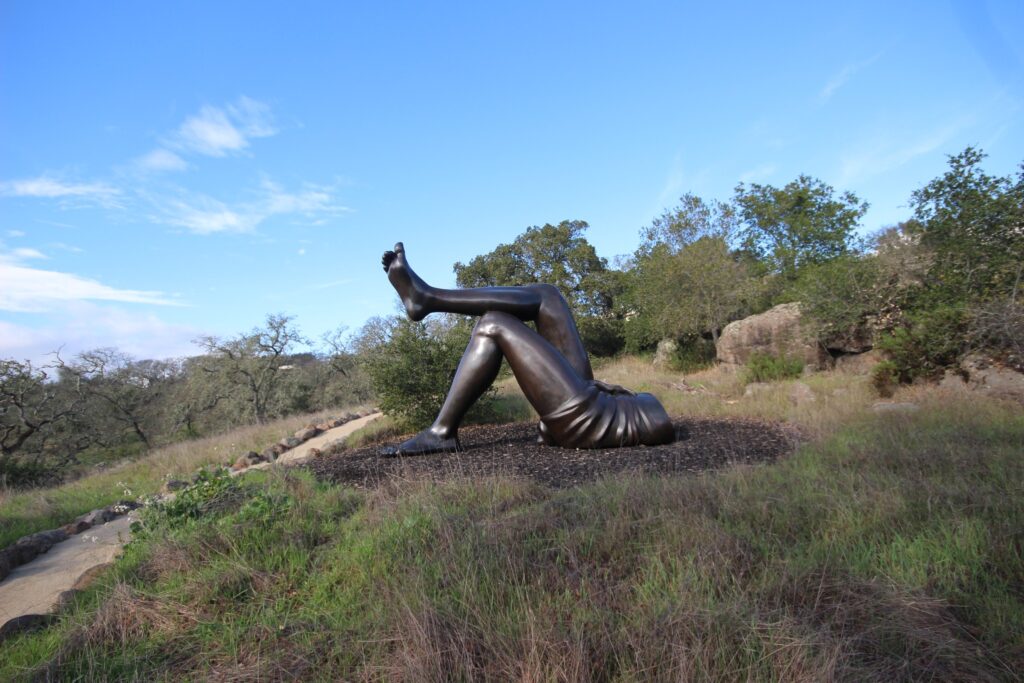
Chatchai Puipia, 'Wish You Were Here', 2008. Bronze, 329 × 170 × 456 cm. Courtesy of the artist and 100 Tonson Foundation.
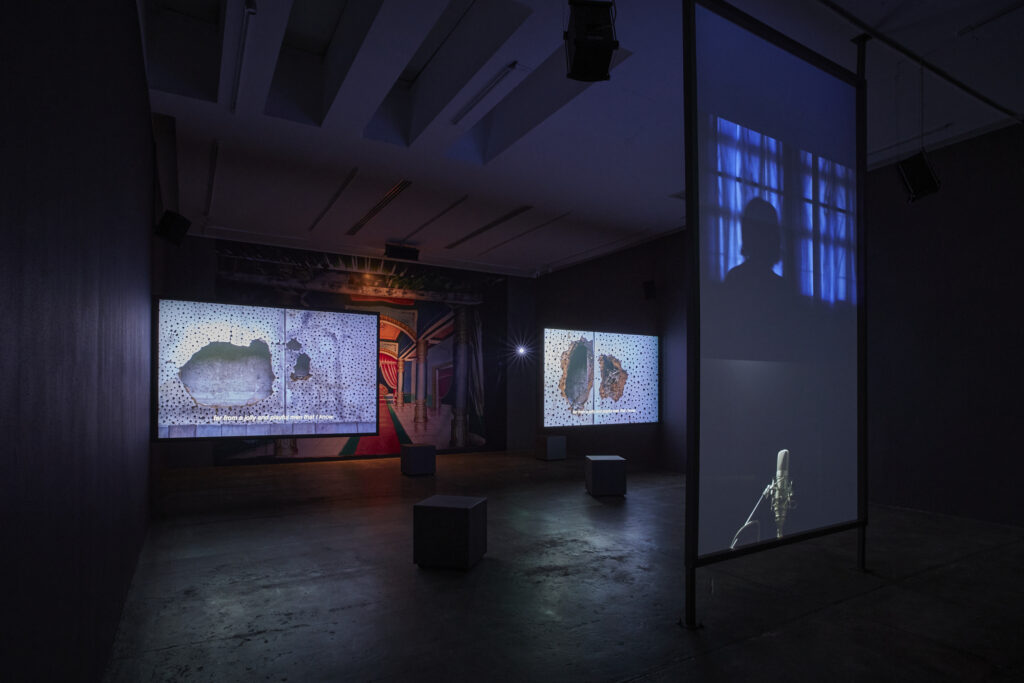
Exhibition view: ‘A Minor History' by Apichatpong Weerasethakul, 100 Tonson Foundation, Bangkok, 19 August 2021 – 10 April 2022. Courtesy of 100 Tonson Foundation.
Over the years, the foundation has funded Apichatpong Weerasethakul’s Memoria (2021) and Pinaree Sanpitak’s monograph. Recently, the foundation gifted artwork to the Hirshhorn Museum, which includes a work by Chatchai Puipia to be erected at the Hirshhorn Sculpture Garden in Washington DC, and is supporting an archive of Araya Rasdjarmrearnsook’s work. “I always felt that we lack information and a systematic way of collecting information and making it available,” she says. Such infrastructure, at the very least, could allow international collectors at fairs to quickly look up artists online.
In the last two decades, the country’s contemporary art scene has undergone rapid transformation, with art writers heralding Bangkok as a new centre of Asian art. Thailand now has major private museums such as MOCA Bangkok, Dib Bangkok Museum of Contemporary Art and MAIIAM Contemporary Art Museum in Chiang Mai and its offshoot MAIELIE; the Bangkok Art Biennale has travelled to Venice—100 Tonson Foundation is a sponsor—while the Thailand Biennale continues to showcase art across different cities and provinces every two years. This is alongside a dynamic ecosystem of artist-run galleries like Cartel Artspace founded by Mit Jai Inn, and collector-backed spaces such as Subhashok Angsuvarnsiri’s SAC Gallery, all of which cemented Thailand’s status as a destination on the international art map.
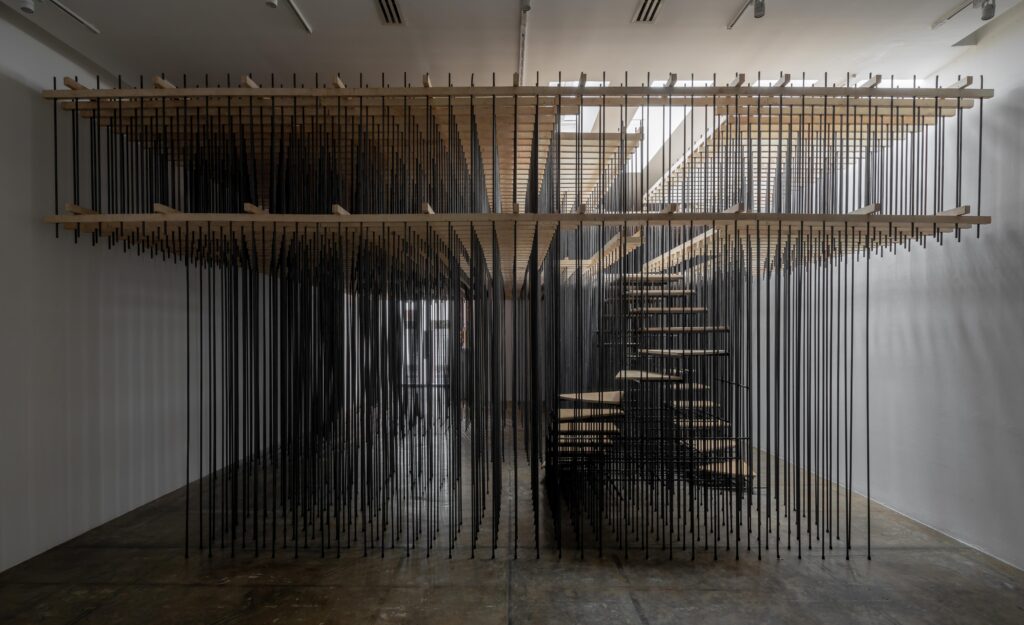
Exhibition view: 'Field Collapse' by Savinee Buranasilapin and Tom Dannecker, 100 Tonson Foundation, Bangkok, 26 November 2022 – 28 May 2023. Courtesy of 100 Tonson Foundation.
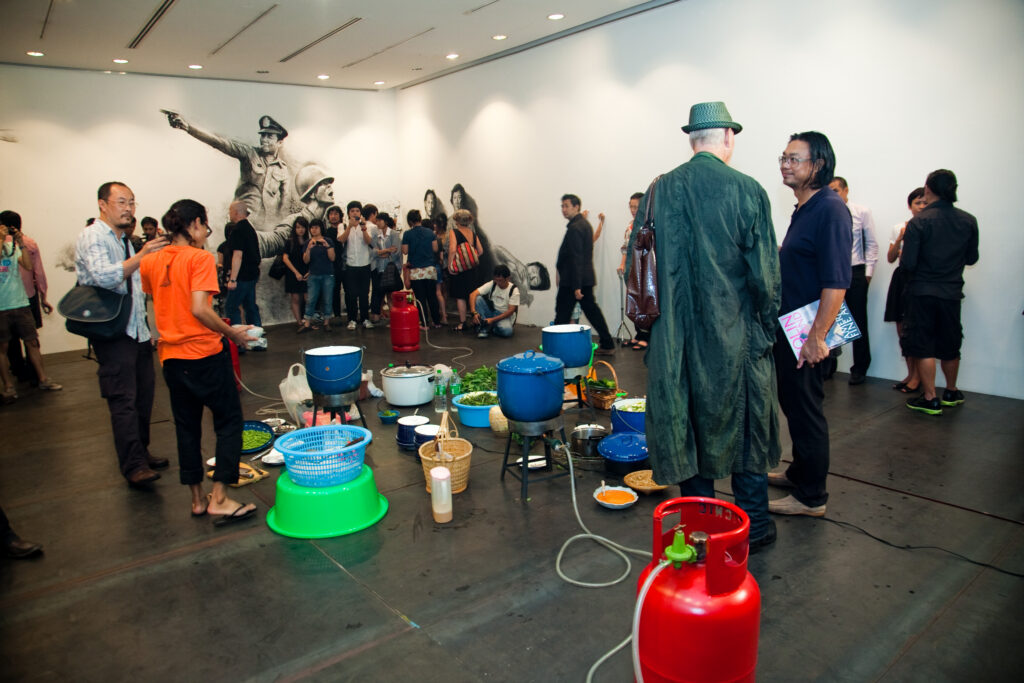
Exhibition view: ‘Rirkrit Tiravanija: (who’s afraid of red, yellow, and green)', 100 Tonson Foundation, Bangkok, 5–28 August 2010. Courtesy of 100 Tonson Foundation.
Looking ahead, as 100 Tonson Foundation prepares to mark 25 years, it is in the midst of launching a fund for artists to develop projects leading up to its anniversary in 2028. “It’s our way of saying, let’s celebrate together. We want to go hand in hand with you,” says Phanachet. New initiatives are emerging every few months or so, from dedicated spaces started by the descendants of prominent artists such as Misiem’s/bangkok showcasing Misiem Yipintsoi’s work and the Tang Chang Private Museum, to the new UNITED Unlimited that will serve as an artist studio complex in Bangkok. Next year, of course, will see the opening of Central Group’s DeCentral in Bangkok and Chiang Mai. “It feels like it’s the moment for Thai contemporary art,” Phanachet says.
About The Author
Karen Cheung is a writer and editor from Hong Kong. She is the author of The Impossible City: A Hong Kong Memoir, which was longlisted for the Andrew Carnegie Medal for Excellence in Nonfiction and named one of the best books of the year by The Washington Post and The Economist. Her work has appeared in The New York Times, New York Magazine, The Nation, The Oxonian Review, and other publications. She was previously Associate Editor at Asia Art Archive, and currently teaches creative writing in Hong Kong.